Fly Ash Processing: Classification, Beneficiation and Use
Say a mine owner asks how to turn a liability pile of fly ash into a saleable cement substitute.
Say a mine owner asks how to turn a liability pile of fly ash into a saleable cement substitute. Fly ash processing is the set of steps that changes raw coal combustion residual into a consistent mineral product. You'll hear it called beneficiation, upgrading or conditioning. All three mean roughly the same thing: remove what shouldn't be there, control moisture, adjust fineness. That's the job. If you get those three right, you have a material a concrete producer can actually stock and dose.
What Is Fly Ash and Why Process It?
Fly ash is the fine particulate carried out of a coal boiler by flue gas and captured by an electrostatic precipitator or a baghouse. It's a coal combustion residual, regulated in the United States under the EPA's coal ash rules. The main oxides are silica, alumina, iron oxide and calcium oxide. The exact chemistry depends on the coal seam and the boiler. That's why two plants burning the same coal can produce ashes that behave completely differently in concrete.
Why process it? Raw ash varies. Unburned carbon levels swing, particle size drifts, moisture makes it sticky and hard to convey. A concrete producer needs predictable water demand, setting time and strength gain. You can't get that from a grab sample. Processing makes the ash regular enough to be a true supplementary cementitious material, not a waste you're trying to hide.
Dry vs. Ponded Fly Ash: Handling Routes
You'll see two broad feed streams at a fly ash processing plant. Dry ash arrives from silo storage, usually already collected dry and conveyed pneumatically. Pond ash sits in an old ash pond or landfill, mixed with water and often aged for years. That distinction drives the entire front end.
Dry ash handling is simpler. You can feed it straight to classification or storage. Pond ash is another matter. It can carry a high moisture load, depending on drainage and rainfall. You'll need to dig it, crush lumps, and dewater it before any dry process equipment will accept it. Pneumatic conveying works for dry ash; sluicing to ponds was the historical wet route. If you're harvesting a pond, you're reversing that old decision.
Drying and Moisture Reduction
Moisture is the enemy of classification and grinding. Wet ash clogs screens, sticks in mills, and complicates pneumatic conveying. So after dewatering a pond ash, you'll almost always dry it. The common industrial routes are a rotary dryer or a flash dryer. A rotary dryer gives you longer residence time and handles variable feed. A flash dryer works when the feed is already fine and you can disperse it in a hot gas stream. The choice comes down to feed moisture swing, particle size and whether you need simultaneous grinding.
You'll set a target moisture based on what your downstream process can handle, not on a single magic number. A cement mill may tolerate a little surface moisture; a pneumatic classifier will not. Test your ash's drying curve first. That shows you how much energy you'll burn and whether you need a pre-drying step. If you're aiming for a calcined product, you'll heat it further, but that's a separate process decision. Calcination, when used, drives off residual carbon and chemically bound water at temperatures high enough to change the ash's reactivity.
Grinding and Fineness Classification
Fineness controls reactivity. If the ash particles are too coarse, they won't react fast enough to contribute early strength. Grinding solves that. You'll typically evaluate a ball mill or a vertical roller mill. A ball mill is forgiving and well understood, but it's energy hungry. A vertical roller mill grinds and dries in one pass and often uses less power per tonne, but it's more sensitive to feed moisture and tramp metal. Run a closed circuit with an air classifier and you'll control top size rather than just average size.
Don't skip air classification. It's the cheapest way to remove coarse quartz and unburnt carbon particles from a dry ash stream. You'll see a classifier fed from a silo, with the fine fraction going to product storage and the coarse fraction either reground or rejected. The target fineness depends on the pozzolanic performance you need. For a concrete-grade ash, the proportion retained on a 45 micron sieve is a common specification, but your client's spec governs. Test it.
Carbon Removal and Beneficiation Routes
Unburned carbon in fly ash is a problem. It increases water demand, adsorbs air-entraining admixtures and weakens the concrete. So you'll often need a carbon removal step. Flotation and magnetic separation are the two routes most discussed for ash carbon removal. Flotation works when the carbon is hydrophobic and the ash is not. Magnetic separation targets iron-rich particles, usually not carbon, but it can clean up a high-iron ash for special uses. Electrostatic separation exists, but its performance depends heavily on feed conditions.
Wet beneficiation uses water to carry particles through flotation cells. Dry beneficiation avoids water but typically gives a rougher split. Which route you pick depends on the ash's carbon content, particle size and whether the carbon is coarse or fine. Low-carbon ash may not need carbon removal at all; it might only need classification. So test before you buy. A laboratory flotation test on a few kilos of your ash will tell you more than a year of supplier brochures.
| Method | Best fit | Main limitation | What to test first |
|---|---|---|---|
| Froth flotation | Hydrophobic carbon, fine ash | Water handling and reagent cost | Carbon recovery vs ash loss |
| Electrostatic separation | Dry ash, large capacity | Humidity sensitivity | Voltage and feed moisture |
| Magnetic separation | Iron-rich particle removal | Does not remove carbon unless carbon is attached to iron | Magnetic fraction chemistry |
Regulatory Context: EPA Coal Combustion Residuals
In the United States, coal ash disposal is regulated by the EPA under the Coal Combustion Residuals rule. The rule distinguishes between disposal and beneficial use. If you process ash into a product that meets a legitimate market specification, you're on the beneficial use side. That's the whole point of a fly ash processing plant. But you can't just declare it; the material has to perform.
Use the EPA's coal ash page as your starting point. Coal Ash (Coal Combustion Residuals, or CCR) lays out the regulatory framework for storage and reuse. The American Coal Ash Association publishes production and utilisation forecasts. For example, the U.S. fly ash market is forecast to average 32 million short tons per year between 2018 and 2039, with utilisation forecast to increase 38 percent over that period. That forecast is from The U.S. Fly Ash Market: Production & Utilization Forecast. When you read those numbers, remember they're aggregates. Your project's economics depend on your local ash quality and your nearest concrete market, not on a national average.
In 2012, 470 coal-fired electric utilities generated about 110 million tons of coal ash, according to an EPA snapshot. More recently, the U.S. electric power industry's combustion by-product production fell from 135.1 million short tons in 2010 to 88.7 million short tons in 2019, a 34 percent decline, and the beneficial reuse rate rose from 38 percent to 44 percent, as reported by the U.S. Energy Information Administration.
Scoping a Fly Ash Processing Plant
You'll scope a plant by starting with a sample, not a flowsheet. Collect a representative composite from your silo or pond. Then run the tests that matter: loss on ignition for carbon, fineness by sieving, XRF for oxide chemistry, and ASTM C618 compliance tests for concrete use. ASTM C618 is the standard that defines Class C, Class F and Class N fly ash and natural pozzolans, as described in Assessing Pozzolanicity of Supplementary Cementitious Materials. If your ash passes, it's a product. If it fails, you now know exactly which unit operation to add.
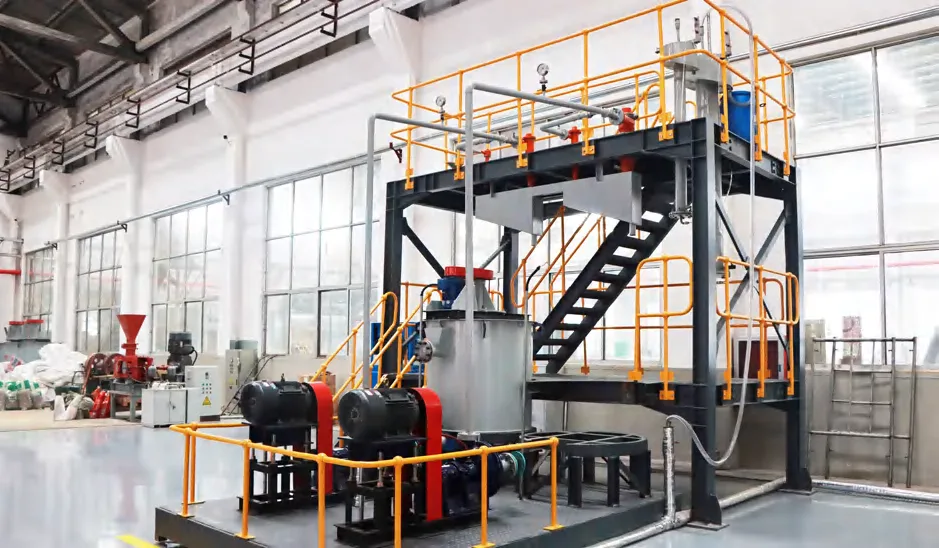
From extraction to finished product, a typical dry ash plant might follow this chain: reclaim from storage, screen or crush, dry if needed, classify, remove carbon if needed, grind if needed, then store and load out. That's the skeleton. The muscle is in the mass balance and the equipment selections, and those come from testwork. If you don't have an internal lab, mineral processing testwork is the first contract you'll sign. A contractor with experience in modular mineral processing plants can often package the unit operations into transportable modules, which helps when your ash pond is remote.
When you're ready to engage an engineering firm, ask for their testwork capability, not just their equipment catalogue. Xinhai reports experience across more than 70 ore types, according to the company's published figures, and its EPC+M+O model covers Engineering, Procurement, Construction, Mine Construction Management and Mine Operation Management. The company operates a mineral processing test laboratory and manufactures processing equipment. But no public fly ash reference is claimed, so the flowsheet for your fly ash will be set by your sample. That is not a limitation. It's just how process engineering works. Start with the contact page if you're ready to talk through a test programme.
Frequently asked questions
What is fly ash and why is it bad?
Fly ash is the fine particulate carried out of a coal boiler by flue gas and captured by an electrostatic precipitator or baghouse. It's not inherently bad, but raw fly ash contains variable unburned carbon, moisture and coarse particles that can harm concrete. Unburned carbon adsorbs air-entraining admixtures and increases water demand. That's why processing is needed before it can be used reliably as a supplementary cementitious material.
What are the fly ash requirements?
Fly ash requirements are set by standards like ASTM C618, which defines Class C, Class F and Class N ashes. Requirements cover fineness, loss on ignition, moisture, available alkalis and strength activity. Your ash must meet the specification your concrete producer or project requires. Testwork determines what processing steps you need to reach that specification.
What are the disadvantages of fly ash concrete?
Fly ash concrete can set more slowly and gain early strength at a lower rate than plain Portland cement concrete. It can also be more sensitive to curing temperature and air entrainment. These drawbacks are not automatic; they depend on the ash's carbon content, fineness and chemistry. Proper processing reduces the variability that causes them.
How is fly ash produced?
Fly ash is produced when coal is burned in a power plant boiler. The fine mineral particles that remain after combustion are carried out of the furnace by flue gas. They are captured by an electrostatic precipitator or a baghouse before the gas exits the stack. The captured material is fly ash. Its composition depends on the coal burned and the boiler conditions.