Quartz sand: purification is a sequence, not a single step
Washing, classification and desliming, scrubbing, magnetic separation, flotation and acid leaching, applied in sequence until the iron and mineral inclusions are gone.
Process route
Every stage removes a different contaminant, so the sequence rarely shortens. Xinhai reports purification to 99.999%, or 5N, in its dust-free laboratory.
Washing and screening
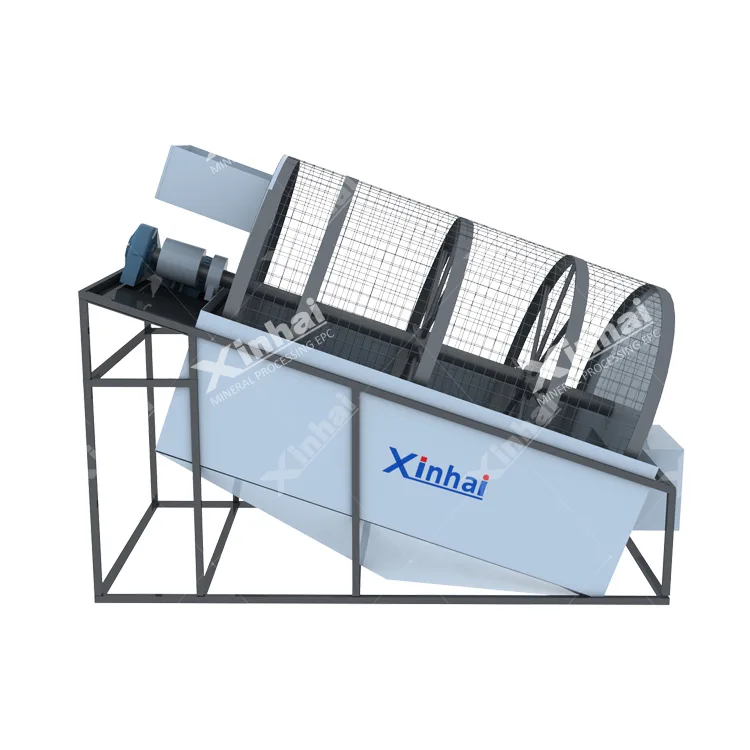
Trommel washing and screening removes clay and oversize from the raw feed.
Classification and desliming
Hydrocyclones remove the fines that would otherwise consume reagents downstream.
Scrubbing
Attrition scrubbing strips iron staining and surface films from the quartz grains.
Magnetic separation
High intensity separation removes iron bearing minerals.
Flotation and acid leaching
Flotation removes feldspar and mica, and acid leaching dissolves the remaining iron to reach high purity grades.
Equipment in this circuit
Manufactured at our own bases and matched to the circuit capacity, not bought package by package.
Trommel screen
Washing and scrubbing of clay bearing and alluvial feed.
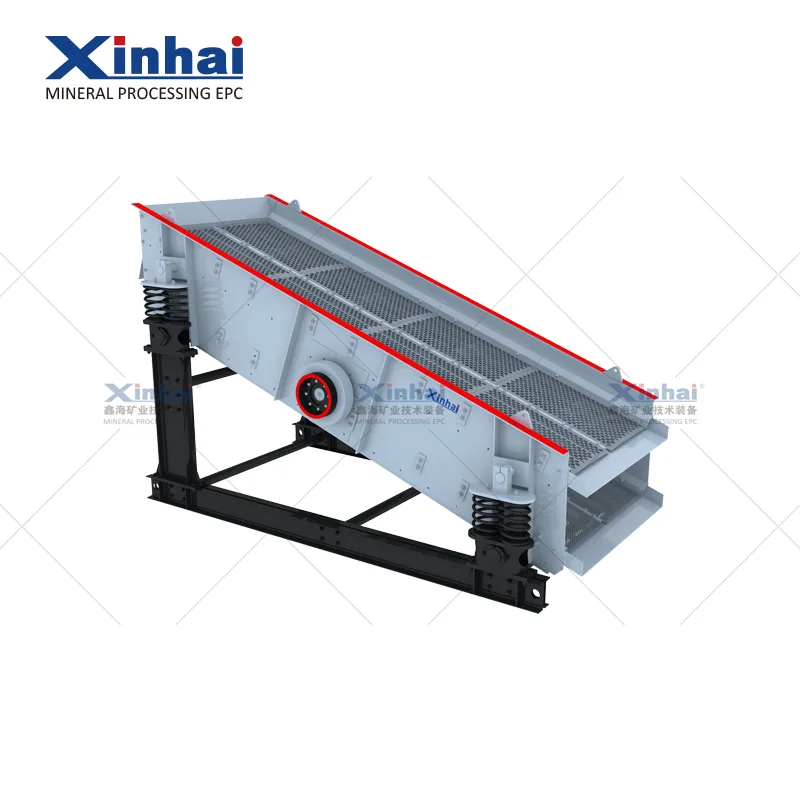
Vibrating screen
Circular, linear, dewatering and banana screens for sizing and dewatering.
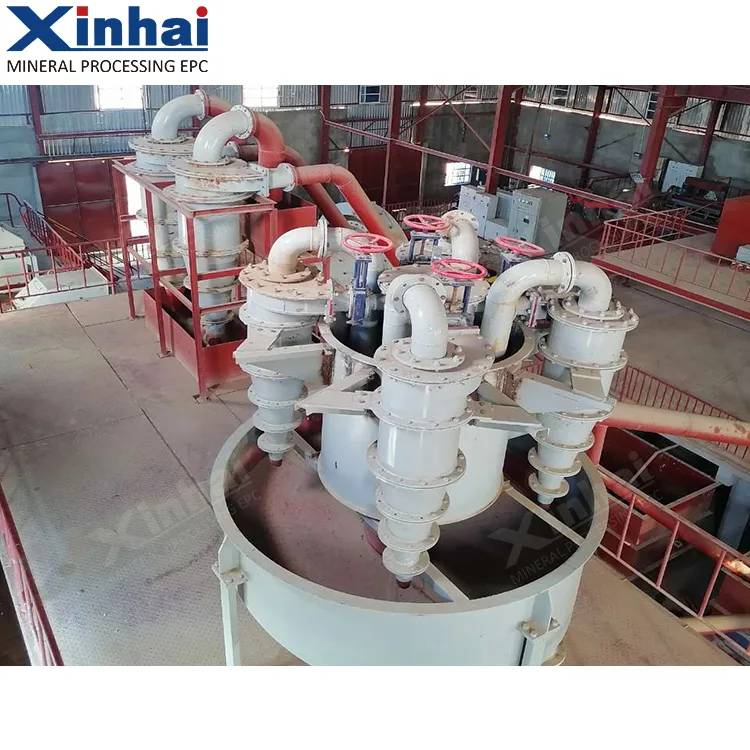
Hydrocyclone
XC, XHCV and XN series for classification, desliming and thickening duty.
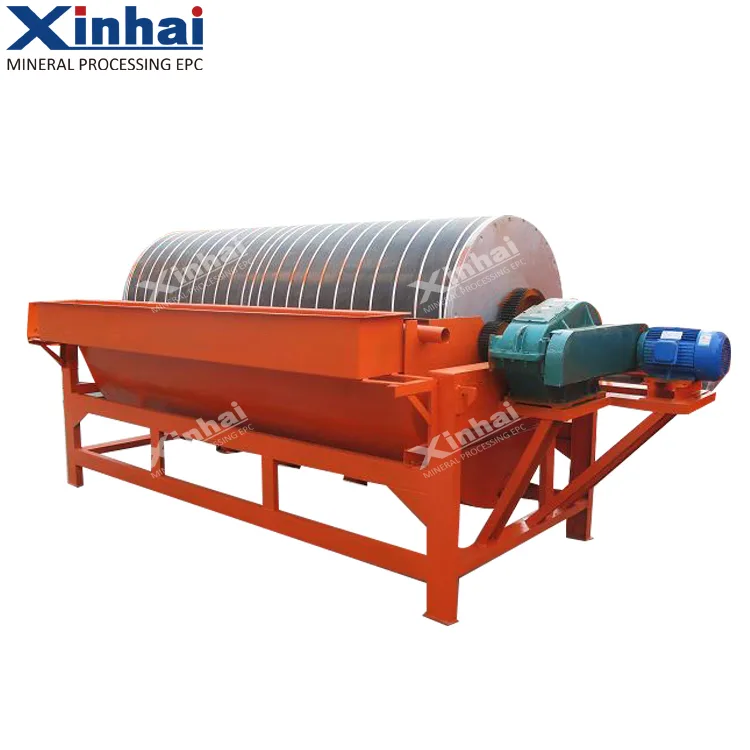
Magnetic separator
Wet and dry drum, high intensity and high gradient separators.
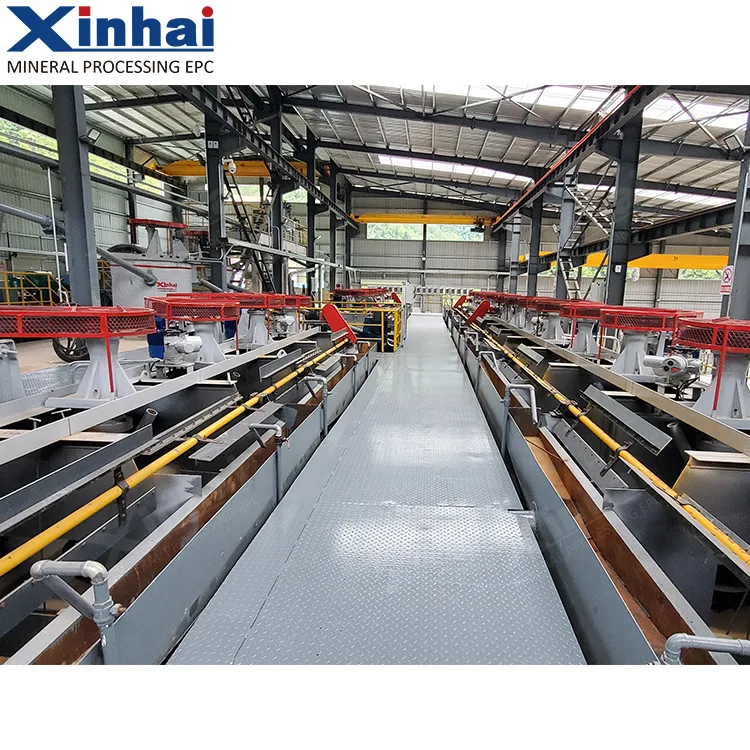
Flotation cells
SF, JJF, XCF, KYF and BF machines up to 320 m3, plus flotation columns.
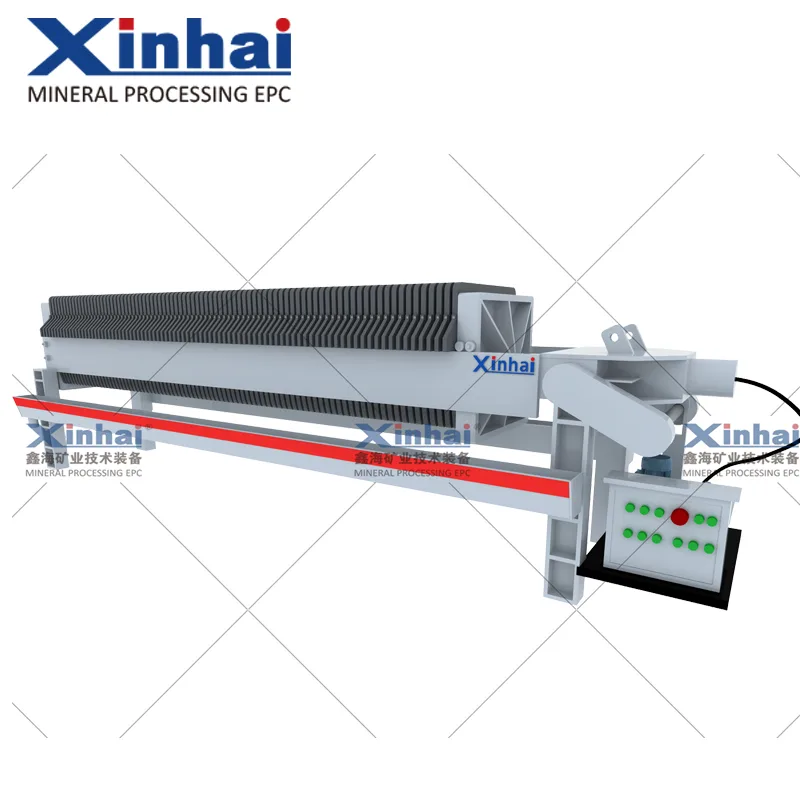
Filter press
Plate and frame and membrane presses for concentrate and tailings dewatering.
Reference projects
Figures are those reported for these projects in the Xinhai project and test brochures.
1,200 t/d quartz sand processing plant
Plant scope2,000 t/d quartz sand processing plant
Plant scope0.9 Mt/a quartz sand processing plant
Plant scopeCommon questions
How pure can the product be?
Is acid leaching always needed?
What limits quartz purity in practice?
What is high purity quartz sand?
Is quartz 100% silica?
How is quartz sand different from regular sand?
How much does quartz sand purification cost?
Start from the product specification, not the process route
The specification drives the flowsheet, not the other way round.
Say a mine owner asks what a quartz sand purification job should deliver. The first answer isn't a flowsheet. It's a specification.
Most buyers tell a contractor their ore type and a vague purity target. That's not enough. You'll end up over-designing or under-delivering. The specification has to state impurity ceilings. Fe2O3, Al2O3, TiO2 and alkalis each affect a different end use. If the limit isn't written down, every downstream choice becomes guesswork.
This isn't a small corner, either. The USGS estimated 120 million tons of industrial sand and gravel sold or used in 2025, according to the 2026 Mineral Commodity Summary. That volume covers many grades. One flowsheet cannot serve all of them.
Forget the process flow for a minute. Write down what the product must be. A container-glass plant can accept more iron than a float-glass plant. A solar crucible buyer won't discuss without a maximum alkali figure. If you can't list the impurity ceilings, you don't yet own the project.
The specification also includes particle-size distribution and grain shape. Some buyers need a tight fraction. Others want rounded grains for resin-coated foundry sand. Those requirements determine whether you crush, grind or only classify. They also set the economics. Over-purifying a container-glass feed is a common way to destroy a project's return. That's where the sand washing plant cost question meets the spec, not just the capex. You can see more on that in our sand washing cost breakdown.
What each end use actually demands
No two buyers want the same sand. Container glass tolerates iron that would colour float glass. Foundry sand values grain shape and thermal stability more than extreme purity. Solar and semiconductor feed chase nines. A rough comparison helps.
| End use | Fe2O3 tolerance | Al2O3 tolerance | TiO2 tolerance | Alkali tolerance | Typical purification path |
|---|---|---|---|---|---|
| Container glass | Higher | Higher | Less critical | Higher | Scrubbing and magnetic separation |
| Float glass | Low | Low | Low | Low | Scrubbing, magnetic and possibly flotation |
| Foundry sand | Moderate | Variable | Low | Low | Washing and classification |
| Solar crucible feed | Very low | Extremely low | Very low | Extremely low | Acid leaching plus high-purity control |
| Semiconductor feed | Ultra low | Ultra low | Ultra low | Ultra low | Acid leaching, thermal treatment, extreme purity |
Every extra nine costs disproportionately more because the removal method changes. A magnetic pass removes free iron. Acid leaching starts when lattice impurities must go. That shift brings effluent, reagent and water handling. It's not a linear cost curve. It's a step change. If you don't need that step, don't pay for it.
Surface iron coatings vs iron locked in mineral inclusions
Iron isn't always where you think it is. Some sits on grain surfaces as oxide coatings. Scrubbing and low-intensity magnetic separation often handle that cheaply. Iron locked inside mineral inclusions needs liberation. You grind until the inclusion is exposed, then separate.
Lattice-substituted aluminium is different. You can't physically separate it. That impurity requires chemical attack or you accept it. This is why mineralogy testing has to come before equipment selection. It's the same logic we apply on feldspar projects where iron is the shared enemy; see our feldspar page. You'll waste money if you buy a flotation circuit before you know whether the iron is on the surface or locked inside.
Particle-size distribution and grain shape as specifications
Size isn't a detail. Many industrial buyers write a window such as 0.1 to 0.3 mm into the contract. If you miss it, they reject the load. Crushing method changes grain shape. Impact crushing produces angular grains. Attrition produces rounder grains. Over-crushing makes fines. Fines reduce yield and create dust exposure, which brings its own design burden.
Hydroclassification is the usual tool to hold a size fraction before any chemical treatment. It's an engineering decision, not an afterthought. Set the target first, then choose the crusher, screen and classifier. If you don't, you'll reprocess product at the end. That's expensive.
Acid leaching is a project decision, not a process step
Acid leaching removes metal oxides and some lattice impurities. It also creates an effluent stream. Neutralisation, fluoride and heavy-metal discharge must be designed, permitted and monitored. If you add acid leaching as a process step without planning water management, you've bought a liability, not a solution.
Question acid leaching whenever the end use allows physical methods. Container glass and many foundry sands simply don't need it. Why would you acid leach a feed that doesn't need it? At the high-purity end, though, it's unavoidable. For example, Xinhai lists a dust-free laboratory used for high-purity quartz sand purification to 99.999% (5N). That grade doesn't come from magnets alone.
The trade-off is water, reagent and waste-management cost against chemical purity gain. There isn't a single right answer. It depends on local discharge rules, water availability and the buyer's budget tolerance. But the decision must be made before the flowsheet is frozen, not after commissioning.
Respirable crystalline silica as a design input
Dry crushing, screening, conveying and bagging generate respirable crystalline silica. You'll need dust control designed into those sections, not bolted on after commissioning.
The regulator sets the number. OSHA's permissible exposure limit is 50 micrograms per cubic metre of air as an 8-hour time-weighted average, as published here. MSHA uses the same limit and adds an action level at 25 micrograms per cubic metre, available here. Wet processing and enclosed transfer points reduce the dust burden before it reaches a worker's breathing zone.
Design the ventilation, capture and suppression as part of the plant layout. Retrofitting a dust system usually costs more than doing it first. The same logic applies to our EPC+M+O services, where we design for compliance from the first layout.
Definition: Quartz sand purification
Quartz sand purification is the process of removing or reducing iron, alumina, titanium and alkali impurities from silica sand to meet a product specification. The specification states impurity ceilings for Fe2O3, Al2O3, TiO2 and alkalis, along with particle-size distribution and grain shape. Purification methods include scrubbing, magnetic separation, flotation, acid leaching and thermal treatment. The choice of method depends on whether impurities are on grain surfaces or locked in mineral inclusions. Surface iron coatings are removed by scrubbing and low-intensity magnetic separation. Iron locked inside mineral inclusions requires liberation by grinding before separation. Lattice-substituted aluminium cannot be physically separated and requires chemical attack or acceptance. Acid leaching removes metal oxides and some lattice impurities but creates an effluent stream that must be neutralised and monitored. High-purity quartz sand for solar crucible or semiconductor feed may require acid leaching and thermal treatment to reach 99.999% (5N) purity. The purification process must be designed from the product specification, not the process route, to avoid over-purifying a feed that does not need it.
What to test before committing to a flowsheet
Test in this order. Mineralogy first: identify impurity occurrence and liberation size. Then scrub and run magnetic separation for surface iron. Flotation testwork follows if feldspar or mica removal matters. Acid leaching testwork only makes sense after physical methods are proven insufficient.
Don't let a lab report become a decoration. Each test should answer a yes/no question: can we remove this impurity physically? If yes, stop there. If no, move to the next stage. That discipline keeps the flowsheet honest and the capital budget sane.
If you've got a specific grade in mind, tell us the impurity ceilings first. We'll work back from there.
Sources
External references for the industry context on this page. Project figures come from our own project brochures.
USGS Mineral Commodity Summaries 2026Estimated 120 million tons of industrial sand and gravel sold or used in 2025
Occupational Safety and Health AdministrationPermissible exposure limit for respirable crystalline silica
Mine Safety and Health AdministrationRespirable crystalline silica PEL and action level
Send the assay and the tonnage target for your Quartz sand project.