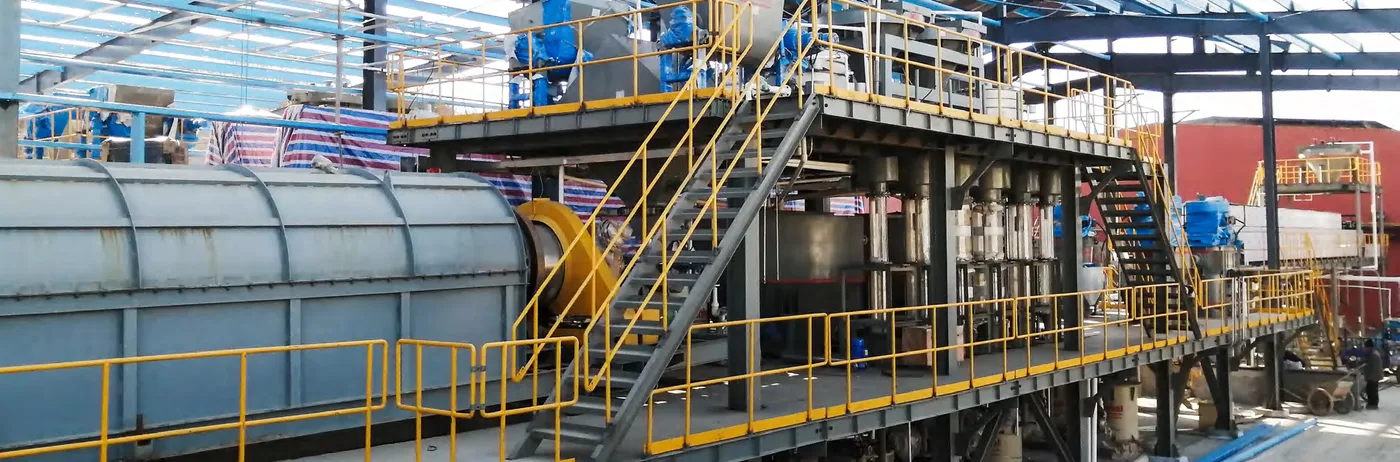
Fluorite: staged cleaning under close temperature and reagent control
Fluorite flotation needs many cleaning stages and careful depressant control to separate calcite and barite. Our Italian project was delivered with CE compliance throughout.
Process route
The technical challenge is separating minerals with similar surface chemistry. The commercial challenge in Europe was compliance, which the Italian project addressed with CE certification across the plant.
Crushing and grinding
Crushing and closed circuit grinding to liberate fluorite from calcite, barite and quartz.
Rougher flotation
Fatty acid collector flotation with depressants for carbonate and silicate gangue.
Multi-stage cleaning
Repeated cleaning, often warm, to reach acid grade specification.
Concentrate dewatering
Thickening and filtration to the moisture specification for the product grade.
Tailings handling
Thickening and disposal, with water returned to the circuit.
Equipment in this circuit
Manufactured at our own bases and matched to the circuit capacity, not bought package by package.
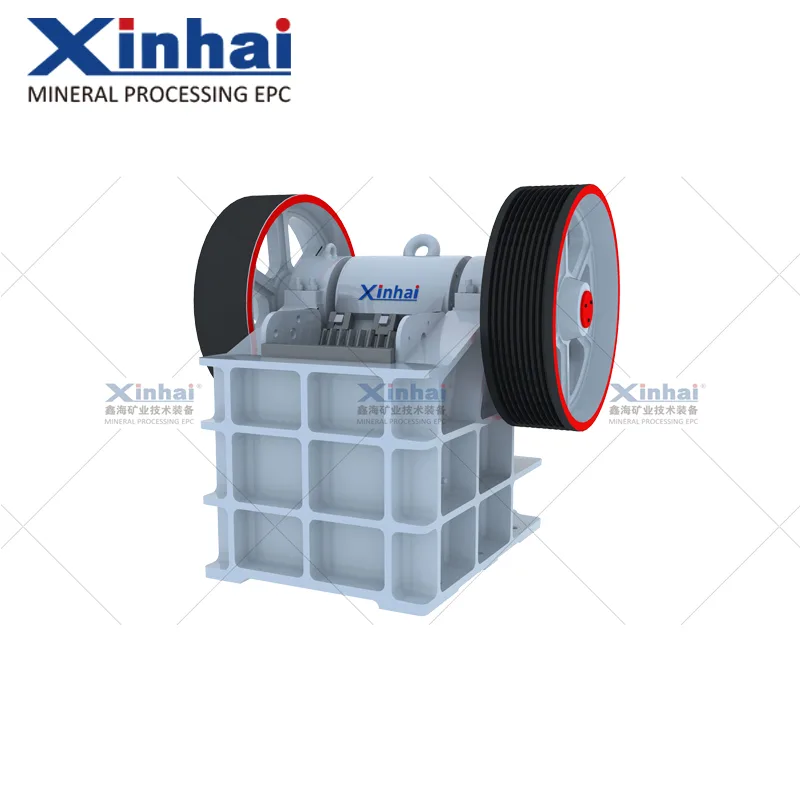
Jaw crusher
PE series for primary crushing and PEX series for secondary and fine crushing.
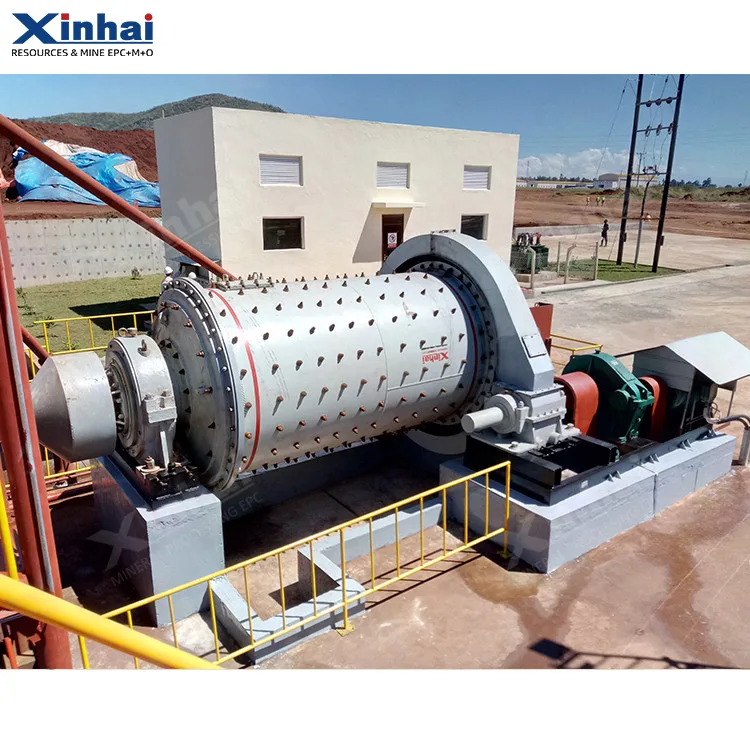
Ball mill
Wet grid mills for primary grinding and overflow mills for secondary grinding.
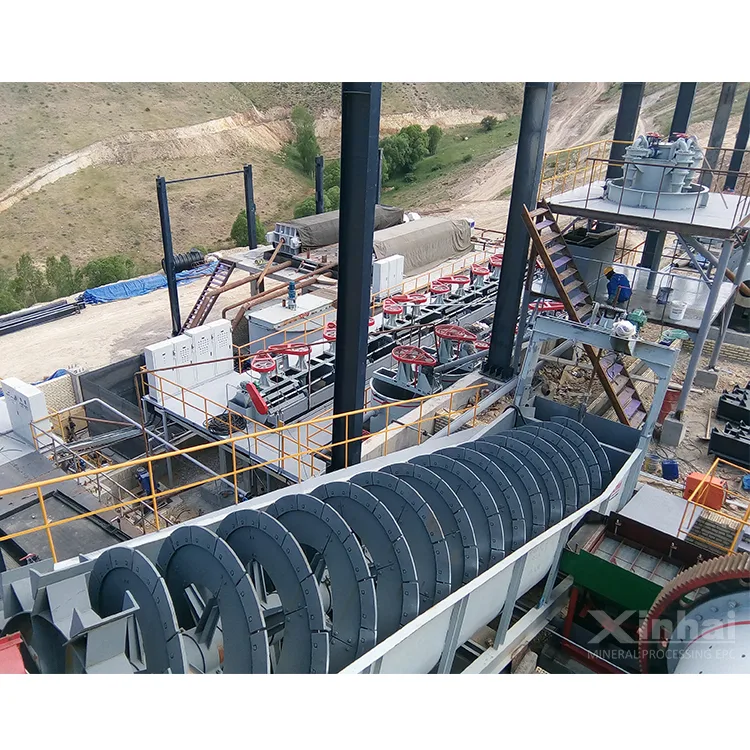
Spiral classifier
High weir classifier for closed circuit grinding and ore washing.
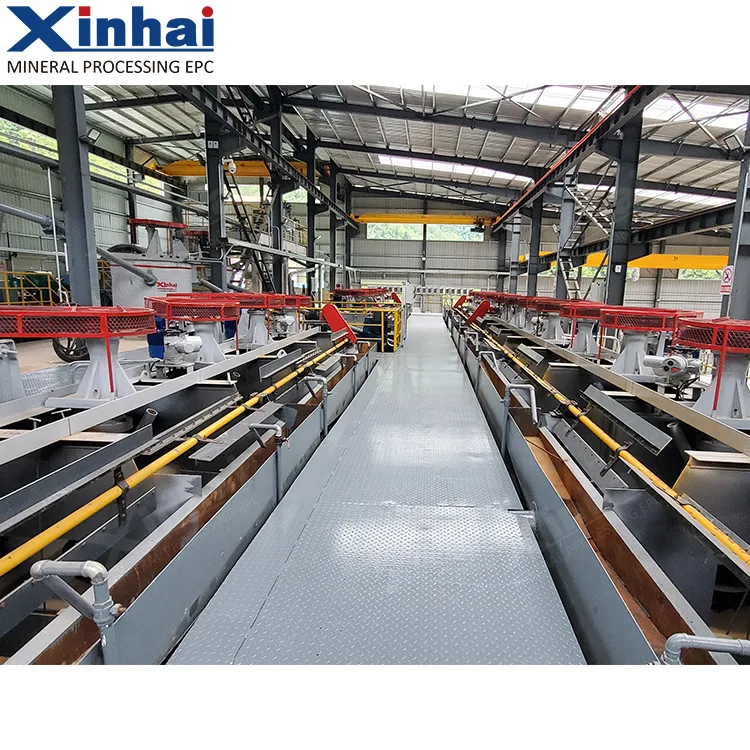
Flotation cells
SF, JJF, XCF, KYF and BF machines up to 320 m3, plus flotation columns.
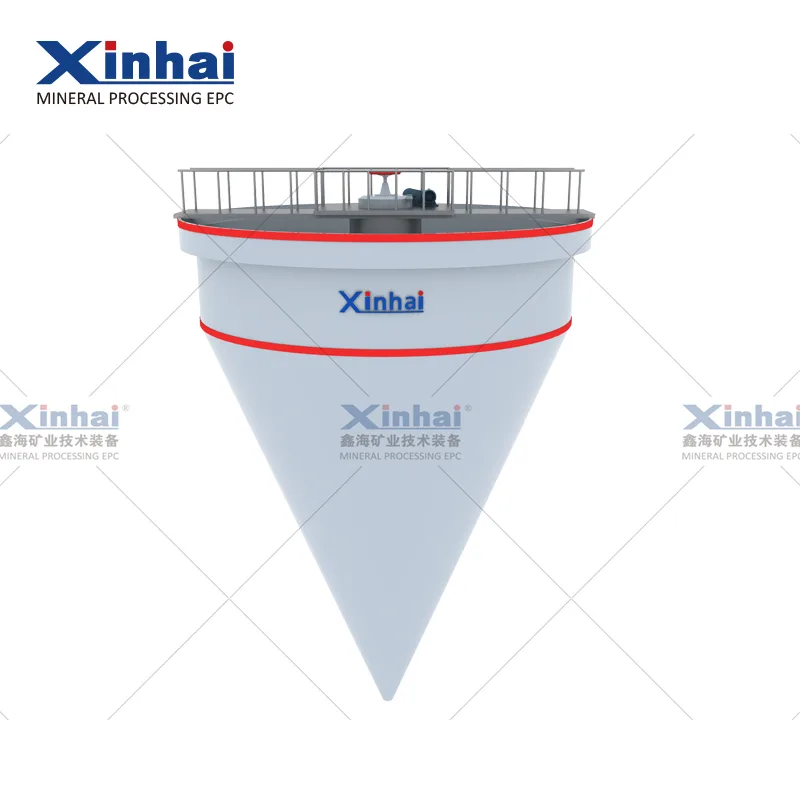
Thickener
Deep cone and high efficiency thickeners up to 100 m diameter.
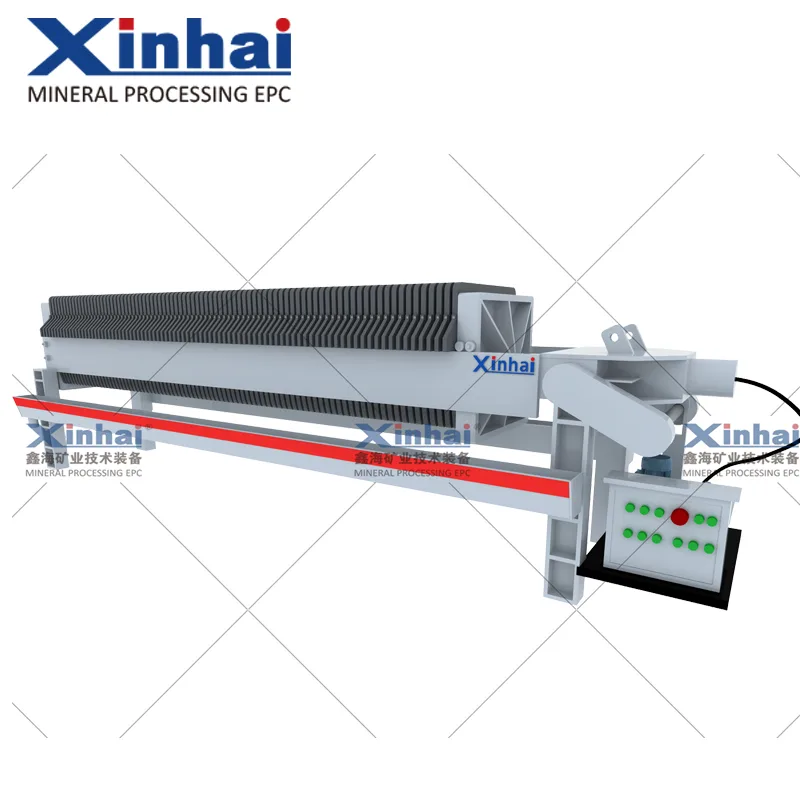
Filter press
Plate and frame and membrane presses for concentrate and tailings dewatering.
Reference projects
Figures are those reported for these projects in the Xinhai project and test brochures.
Common questions
What made the Italian project different?
Can Xinhai reach acid grade fluorspar?
What other industrial minerals does Xinhai process?
What happens when you put fluorite in water?
Is fluorite a toxic mineral?
Is fluorite radioactive or not?
What information do I need before sizing a fluorite flotation circuit?
Start with the offtake specification, not the flowsheet
Fluorite flotation pays only when the circuit is built around a written product specification, not a rough concentrate.
Say a mine owner asks, 'Can you build me a fluorite flotation plant?' The honest first question is not about tank cells or reagent suites. It's about the offtake contract. What grade does it call for? Acid, ceramic or metallurgical? That answer changes the entire circuit. Fluorite flotation is not one process, it's a family of flowsheets divided by the purity you have to sell.
Fluorite flotation is one of those flowsheets that can be simple or impossible depending on the answer to one question: what are you actually selling? The USGS Minerals Yearbook defines acid grade as fluorspar with a minimum CaF2 content of 97%. That product goes to hydrofluoric acid manufacture. Metallurgical grade is everything below 97% CaF2, used mainly as a steelmaking flux. Cement grade is generally 40% to 50% CaF2, aimed at the cement industry. Ceramic grade sits in its own contract window, and no universal figure appears in the sources we can cite. You'll have to ask the offtaker for that number.
| Commercial grade | CaF2 basis | Typical downstream use | What usually kills the deal |
|---|---|---|---|
| Acid grade | Minimum 97% CaF2 | Hydrofluoric acid manufacture | Silica and sulphur above contract limits, excess carbonate |
| Metallurgical grade | Less than 97% CaF2 | Steelmaking flux | Usually a lower-value product, but still needs marketable sizing and chemistry |
| Cement grade | Generally 40% to 50% CaF2 | Cement industry | Contaminants that affect cement kiln operation, but the spec is very different from acid grade |
| Ceramic grade | No universal figure in our approved sources; check the offtaker | Ceramic and glass batches | Colour-causing impurities, iron and specific size bands |
You'll notice I've not put hard SiO2 and sulphur limits in that table. That's deliberate. The 97% split is a published definition. The actual silica and sulphur maxima are written into each offtake contract and an HF acid plant's feed specification, not into any universal standard we can cite here. If the buyer cannot produce that written spec, you don't yet have a project. You have an idea for a project.
The USGS 2026 summary notes the United States has been 100% net import reliant for fluorspar in 2025, excluding sales from stockpiled fluorspar, and significant mine production has not been reported since 1995 (Mineral Commodity Summaries 2026). That import reliance doesn't change your flowsheet, but it changes the offtake conversation. A buyer in a net import reliant market may pay more attention to acid grade than metallurgical grade, because acid grade is the feedstock for a strategic chemical.
You'll find similar specification-first thinking on our industrial mineral solutions pages.
What the deposit mineralogy dictates before any reagent is chosen
Carbonate content is the single most important input before you select a single reagent. Calcite and barite float on the same fatty acid collectors as fluorite. Say the ore contains 20% calcite. The circuit is not a fluorite flotation circuit with a bit of gangue. It's a selective separation problem. Know the carbonate percentage before you size anything. Head grade also cannot be a single blended number. A deposit with high-grade domains and low-grade halos will mislead you if blended. You need head grade by domain, because each domain may need a different reagent dosage and cleaner demand.
Quartz type, carbonate type, barite type and sulphide type ores each demand a different depressant and pH strategy. A proper testwork programme starts with these inputs. You'll find the sampling and test design covered on the mineral processing test page. Do not skip the full mineralogy, including carbonate content and sulphide species. That data is what turns a guess into a flowsheet. If the mineralogy shows a mix of fine grained fluorite and calcite, regrinding in the cleaner circuit becomes almost certain. The same logic applies to barite and quartz. Mineralogy is not a box to tick. It is the map that tells you where the hard separations will be.
Why calcite and barite are the hard separations
Calcite and barite share the same fatty acid collector chemistry as fluorite. That's the core problem. You cannot simply float fluorite and leave them in the tailings, because they want to float too. Selectivity has to come from depressants, pH and water chemistry, not from a magic collector. Sodium silicate, tannin extracts, lignosulphonates and dextrin are the common directions. Each has a dosage window. Push the dosage too far and you'll depress fluorite as well. Under-dose and you'll get a concentrate full of carbonate.
For barite type ore, mixed flotation followed by separation is the usual route. Float all three minerals together off the gangue, then separate fluorite from barite and calcite in a second stage. This is not a beginner's circuit. The separation often needs a different pH, a different depressant, and much tighter water control than the roughing stage. A common mistake is to run the rougher at a high pH and then wonder why selectivity collapses in the cleaner. The pH that works for roughing may not be the pH that works for separation. You'll often run two different pH setpoints in the same plant.
Water chemistry, pH and pulp temperature as control levers
pH is the lever most people reach for first. The window shifts with gangue type, but many operators run in the mildly alkaline range. The exact setpoint is a test variable, not a number you can copy from another plant. You'll need to find the pH where fluorite recovers but calcite does not. That point can move if your water hardness changes.
Pulp temperature changes carboxylic acid collector solubility and dispersion. In cold conditions, some collectors become sluggish and recovery drops. Raise the temperature and you might recover more fluorite, but often at the cost of selectivity, because calcite starts floating too readily. Water hardness and dissolved ions consume collector and alter depressant performance. So water quality is a test variable, not an afterthought. Run the tests with the actual site water, not distilled water from the lab tap. Water recirculation also concentrates dissolved ions. If you recycle thickener overflow or tailings water, test the circuit with that water chemistry, not just fresh water. A depressant that works in fresh water can fail when calcium and sulphate build up.
Why acid grade means a long cleaner chain
Acid grade fluorite requires repeated cleaning. Trace carbonate and silica that survive roughing will fail the 97% CaF2 specification. So you rough, then clean, then clean again. Each cleaner stage lifts the grade but drops recovery. That's the trade. Regrinding between cleaner stages is often needed to liberate locked carbonate and silica. If you don't regrind, you'll carry locked gangue into the final concentrate. If you over-grind, you'll make fines that hurt filtration and recovery.
The number of cleaner stages is an economic decision driven by the gap between head grade and the written specification. A high head grade with low carbonate might reach acid grade with fewer cleaner stages than a low grade, carbonate rich ore. There is no fixed number. The testwork determines how many stages are justified, and the offtake margin tells you whether that circuit still makes money. The economic decision is not simply how many cleaners. It's how much fluorite you are willing to lose to hit the grade. The gap between head grade and written specification tells you that. Testwork gives you the grade recovery curve for each cleaner stage.
Silica and sulphur: the limits a hydrofluoric acid plant imposes
Silica and sulphur are not just grade diluents. In a hydrofluoric acid plant they are process poisons. Silica contaminates the acid process, and sulphur compounds corrode equipment and degrade product quality. Sulphide type fluorite ore must have sulphides removed first, usually with xanthate collectors, before you start fatty acid fluorite flotation. If you try to float fluorite first, the sulphides come along and spoil the concentrate. The buyer should confirm the exact SiO2 and sulphur maxima in the offtake contract before you accept a concentrate specification. Do not guess those limits. Ask for the written contract. When sulphides are present, a separate sulphide flotation step ahead of fluorite flotation is standard. Xanthate collectors are selective for sulphides under the right conditions. After sulphide removal, the pulp often needs conditioning before fatty acid collectors are added. For a worked example of how a fluorite project is structured, see the project page.
Moisture and filtration on the final concentrate
Final concentrate moisture is a contract term for acid grade fluorspar, not an afterthought. An HF plant may penalise you for every percentage point above the specified moisture. Filtration performance depends on particle size, clay content and slurry temperature. These three variables must be tested on the actual concentrate, not on a hand-picked lab sample. Over-grinding in the cleaner circuit can create fines that slow filtration and raise final moisture. You can lose more money on moisture penalties than you saved by adding an extra cleaner stage. Test filtration early, with the real concentrate, at the expected solids density. Thickener underflow density, filter cloth selection and vacuum level all respond to the same variables. A clay rich concentrate will blind a filter cloth quickly. Test filtration with realistic clay content, because a clean lab sample will give you a misleadingly high filtration rate.
The same acid grade target that demands a long cleaner chain also demands dry, low moisture concentrate. That's not a contradiction. It's a single design constraint. If the offtake specifies a moisture limit, design the filter and drying circuit to hit it. If you don't know the moisture limit, you're not ready to size the thickener or the filter.
Sources
External references for the industry context on this page. Project figures come from our own project brochures.
USGS Minerals Yearbook 2018 - FluorsparAcid grade 97% CaF2 definition, metallurgical grade below 97%, cement grade 40-50% CaF2
USGS Mineral Commodity Summaries 2026 - Fluorspar100% net import reliance in 2025 and no significant US fluorspar mine production since 1995
Send the assay and the tonnage target for your Fluorite project.