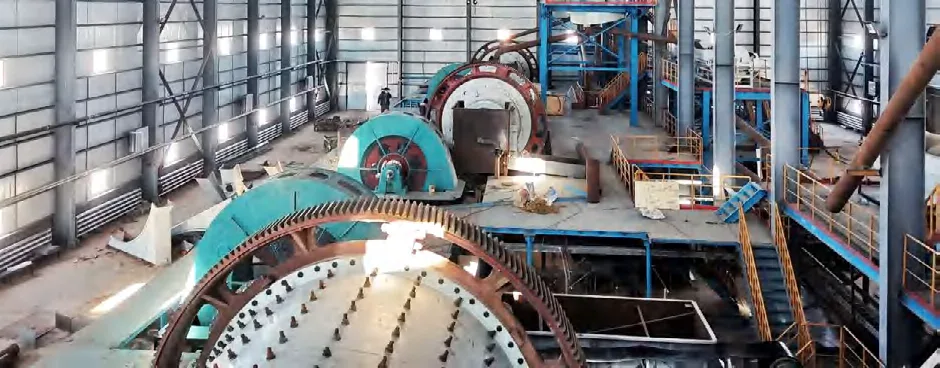
Molybdenum: many cleaner stages, and often the mine as well
Molybdenite floats readily but needs repeated cleaning to reach concentrate grade. On several projects Xinhai also carries the underground development and the operation.
Process route
The technical work is in the cleaner circuit and the reagent regime. The commercial work is often in the mine, where development rate governs the ramp-up.
Crushing and grinding
Crushing and closed circuit grinding, controlled to avoid overgrinding molybdenite.
Rougher flotation
Bulk molybdenum rougher flotation with collector and frother suited to the ore.
Regrind and multi-stage cleaning
Rougher concentrate is reground and cleaned repeatedly to reach concentrate grade.
Copper separation where present
In copper-molybdenum ores, the bulk concentrate is separated into copper and molybdenum products.
Dewatering and drying
Concentrate thickening, filtration and drying before dispatch.
Equipment in this circuit
Manufactured at our own bases and matched to the circuit capacity, not bought package by package.
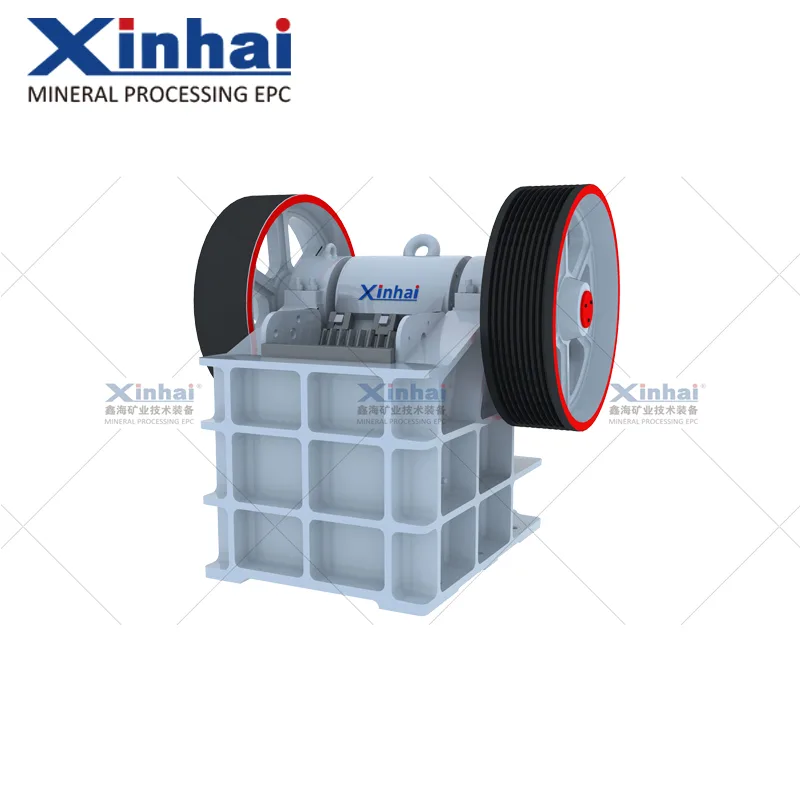
Jaw crusher
PE series for primary crushing and PEX series for secondary and fine crushing.
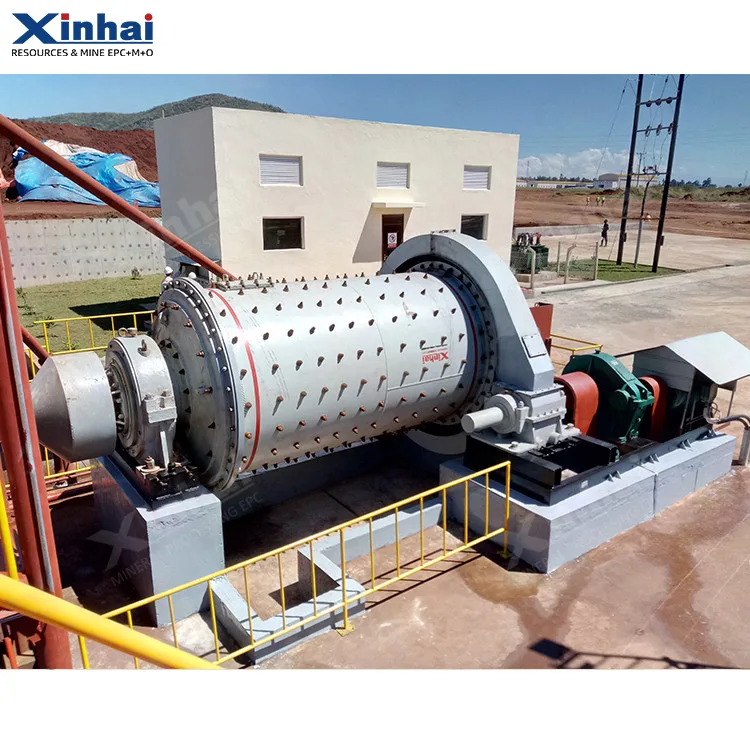
Ball mill
Wet grid mills for primary grinding and overflow mills for secondary grinding.
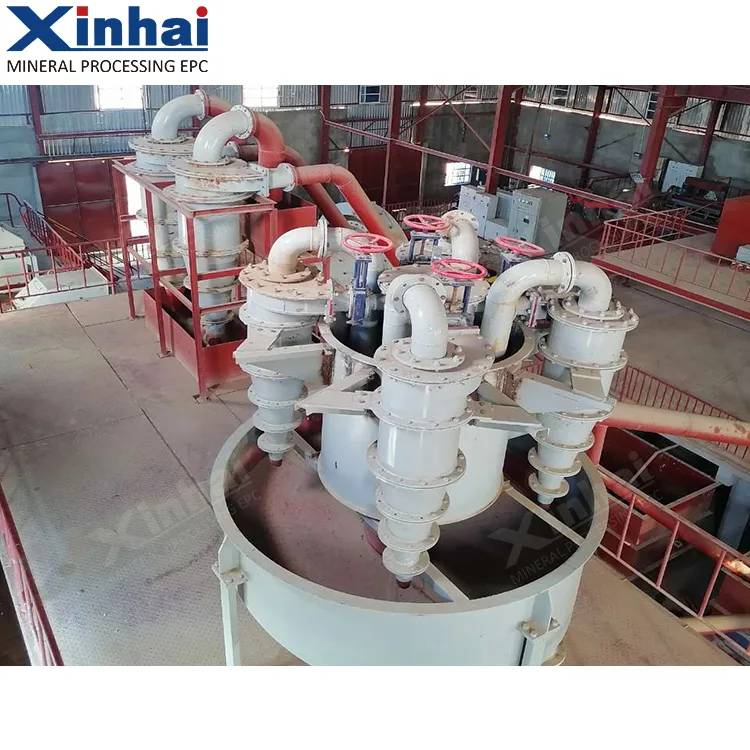
Hydrocyclone
XC, XHCV and XN series for classification, desliming and thickening duty.
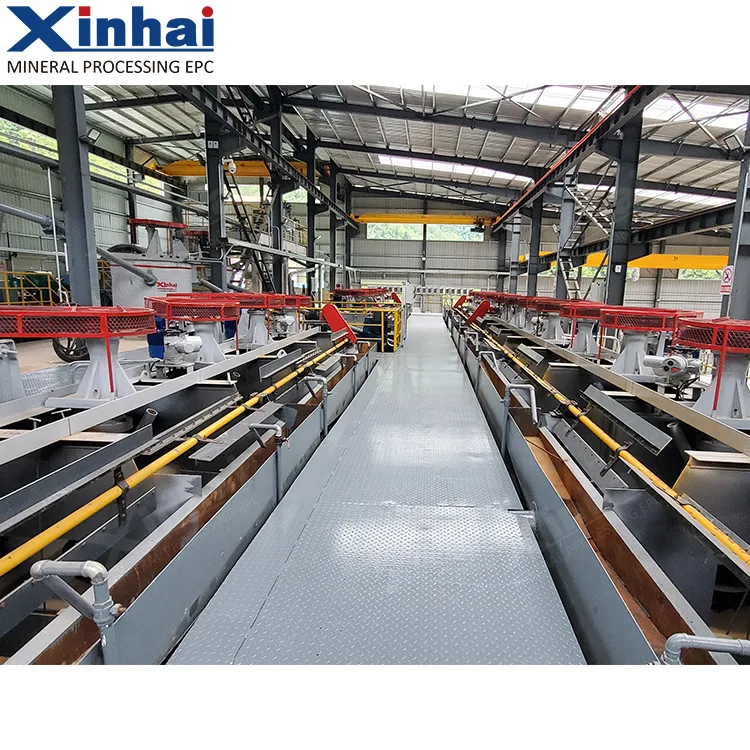
Flotation cells
SF, JJF, XCF, KYF and BF machines up to 320 m3, plus flotation columns.
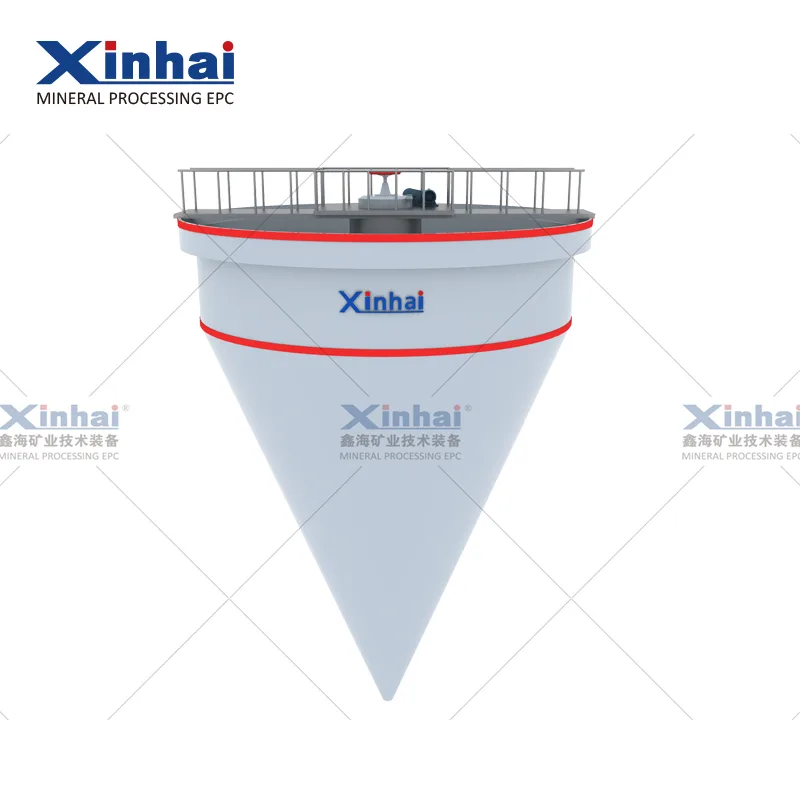
Thickener
Deep cone and high efficiency thickeners up to 100 m diameter.
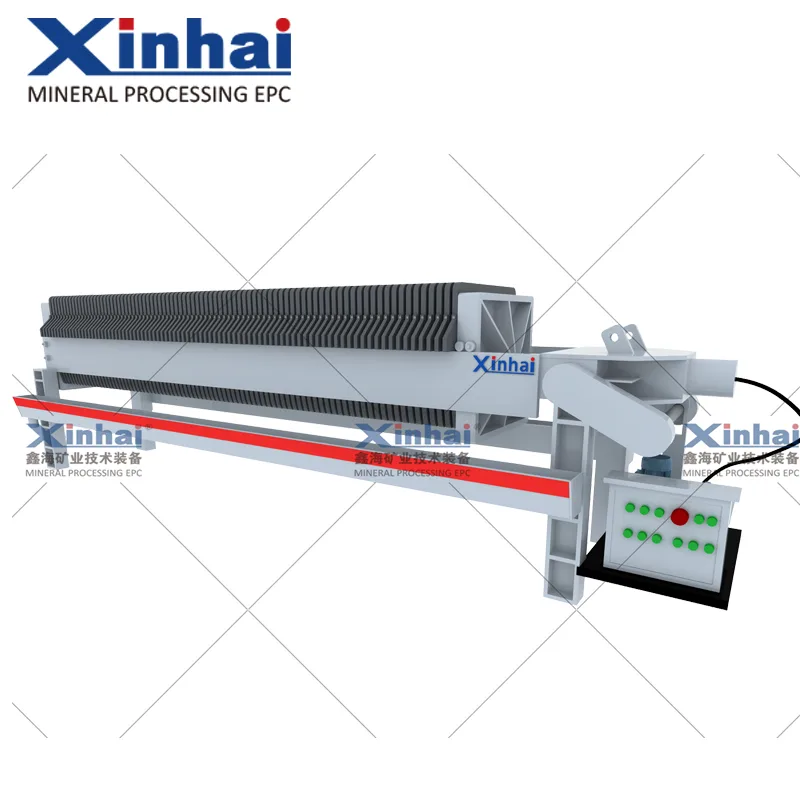
Filter press
Plate and frame and membrane presses for concentrate and tailings dewatering.
Reference projects
Figures are those reported for these projects in the Xinhai project and test brochures.
4,000 t/d molybdenum mine, fully mechanised development fleet, key milestones brought forward
C+M+O2,000 t/d molybdenum and tungsten processing plant
Plant scopeCommon questions
What did Xinhai do on the Hebei molybdenum project?
Why does molybdenum need so many cleaner stages?
Can Xinhai take the mining contract alone?
What are the disadvantages of molybdenum?
How rare is molybdenite?
What are 5 common uses for molybdenum?
What are the signs of molybdenum toxicity?
Why molybdenite floats easily but is hard to clean to contract grade
This is the buyer-side judgement part of molybdenum flotation: what to test, what goes wrong, and what a smelter will actually reject.
Molybdenum flotation looks simple. Molybdenite is naturally hydrophobic, and a few drops of fuel oil will lift it into a rougher froth. But cleaning that froth to a roaster or ferromolybdenum buyer's specification is where the trouble hides. Say a mine owner asks: "Why does my rougher concentrate grade well but the final shipment still attracts penalty charges?" The answer usually sits in three places: overgrinding, copper and lead deportment, and oxidised surfaces.
Contact angle data tell the story. A review of molybdenite flotation (ScienceDirect) reports that natural molybdenite faces are hydrophobic while the edges are hydrophilic. One study on natural crystals obtained a contact angle around 80° for the faces. That anisotropy means a liberated, unoxidised molybdenite flake will attach to a bubble strongly, but any broken edge or attached gangue can drag it back. You'll float molybdenite with a light hydrocarbon collector because the surface already wants air. Rougher recovery is rarely the problem. The problem is cleaning. Because the mineral is so floatable, it doesn't need a strong collector, so selectivity against pyrite and chalcopyrite comes mostly from depressants, pH and staged regrinding. If you pull too hard early, you'll entrain fine gangue and sulphides that no amount of cleaning will shed.
Overgrinding: how molybdenum slimes destroy recovery
Molybdenite is soft, laminar and greasy. Overgrind it and you don't get clean liberation; you get smears and flakes. One published study on a finely disseminated molybdenum ore found that 61.63% of the molybdenite particles in the raw ore were smaller than 20 μm and intergrown with muscovite and pyrite (EPA Hero). Conventional flotation collects particles below 25 μm poorly, so that ore starts at a disadvantage. Now add a ball mill that runs a little too fine and you create a black slime that coats bubbles, blocks collector attachment and lifts everything without discrimination.
Staged grinding is the standard answer. You grind just enough to expose the mineral faces, float what is free, and send the middlings back for regrind. Waiting until the end to grind once means more fines, more reagent consumption and a rougher concentrate full of colloidal gangue. Flash flotation can remove liberated molybdenite early, before it has a chance to slim.
Copper-molybdenum separation: the step that sets the flowsheet
Most porphyry molybdenum comes with copper. You'll face a choice: bulk flotation followed by selective molybdenum flotation after copper and iron sulphide depression, or preferential molybdenum flotation from the start. Bulk flotation then separation is the common route because both minerals float naturally together. The separator chemistry matters more than the collector. Sodium hydrosulphide is the benchmark copper depressant, but it carries HSE concerns and releases toxic H₂S if the pH drops. Polysulphide alternatives offer safer handling, but they change the pH control strategy (patent).
| Route | When to consider | Main risk | Typical depressant chemistry |
|---|---|---|---|
| Bulk flotation + Cu-Mo separation | Ore with payable copper and molybdenum | NaHS handling and dosing; copper depression may lower Mo recovery if overdone | Sodium hydrosulphide, sodium sulphide, sodium thioglycollate or polysulphides |
| Preferential molybdenum flotation | Low copper but payable molybdenum | Copper and iron sulphides may report with molybdenum without strong depression | High pH with lime; similar sulphide depressant family |
One locked-circuit test on a copper-molybdenum bulk concentrate reported 21.05% Cu and 1.10% Mo in the bulk product, with copper recovery of 87.37% and molybdenum recovery of 77.07%. After selective flotation, the molybdenum concentrate assayed 46.19% Mo and 0.75% Cu at 93.80% molybdenum recovery, while the copper concentrate reported 21.50% Cu and only 0.069% Mo at 99.92% copper recovery (SAIMM). Those numbers show the separation has to land the molybdenum in one product and keep copper almost entirely out of the other. For a deeper look at the copper side, see the copper circuits page.
Penalty elements a roaster and ferromolybdenum buyer will not accept
Contract grade is not just molybdenum content. It's a set of limits on copper, lead, arsenic, phosphorus, tin and sometimes bismuth. A roaster blends concentrates to manage furnace load and off-gas. If your copper sits at 0.75%, that may be acceptable in one contract and a penalty in another. Lead and arsenic are usually the harder rejects because roasting chemistry sends them into the gas or slag route, and a ferromolybdenum furnace has even tighter limits. You can't fix a penalty element after flotation with a re-clean. You either depress it, leave it in the tailings or blend it away. That means the mineralogy must have identified which penalty element is hosted in which mineral and at what liberation size. Galena floats with molybdenite if you're not careful. Arsenopyrite floats too. If you don't know those minerals are present, you'll find out from the buyer's rejection note.
Ask your buyer for their penalty schedule. It will vary by roaster location, concentrate blend and ferromolybdenum plant. Grade alone tells you almost nothing about saleability.
Oxidised and weathered feed: when flotation stops working
Oxidation strips the face hydrophobicity that makes molybdenum flotation easy. A fresh basal plane may have a contact angle above 60°, often around 80° (ScienceDirect). Weathering or an oxidised zone can drop that to near zero, especially if clays form. One study reports the molybdenite face completely loses its hydrophobicity, contact angle 0°, with just 50 ppm of clay in fresh water, and close to 80 ppm was required in seawater (PMC). That's a dramatic change. Oxidised molybdenite won't attach to bubbles. It reports to tailings even though the assay still shows molybdenum in the feed. Weathered ore also generates slimes that coat the few remaining hydrophobic faces.
Before you commit to a flowsheet, run bench oxidation tests. Measure the contact angle, or use a simple micro-flotation test on a freshly ground sample and on a sample left to weather for a week. Compare the kinetics. If the oxidised test loses more than a trivial amount of recovery, the flowsheet needs a different collector, a sulphidiser or a pre-aeration step. No pilot plant will fix a problem that bench tests can show for the cost of a few hours.
What to test first: the minimum data a buyer must supply
You can't design or even quote a molybdenum flotation plant without four pieces of data. Mineralogy first: how much of the molybdenum is actually molybdenite, what is the liberation size and which penalty minerals coexist. Copper and lead content second: you need both assay and deportment, or you'll guess the separation route. Oxidation state third: fresh drill core behaves differently from weathered surface material. Finally, a bench flotation test: a timed rougher, a cleaner and a locked-cycle if possible, run on a representative composite. Anything less is a guess dressed up as an estimate. Feed variability after start-up is a separate challenge, and the contract mining and operation page covers how a steady mine plan supports a steady plant. For market and resource context, the USGS Mineral Commodity Summaries describe molybdenum supply and end uses, which shapes how buyers set penalty schedules.
Sources
External references for the industry context on this page. Project figures come from our own project brochures.
Review of the flotation of molybdenite. Part I: Surface properties and floatabilityhydrophobic faces and hydrophilic edges, contact angle around 80°
An effective approach for improving flotation recovery of molybdenite fines from a finely-disseminated molybdenum ore61.63% <20μm distribution and poor collection below 25μm
AU2015243469A1 - Depression of copper and iron sulfides in molybdenite flotation circuitsNaHS benchmark and polysulfide HSE advantages
New Flotation Reagents for Copper–Molybdenum Orebulk and final concentrate grades and recoveries
Uncovering the hetero-hydrophobic attraction between bubbles and molybdenite surfacesbasal plane contact angle above 60°
Study of Molybdenite Floatability: Effect of Clays and Seawatercontact angle loss with clay and seawater
USGS Mineral Commodity Summaries 2025: Molybdenummarket and resource context for penalty schedules
Send the assay and the tonnage target for your Molybdenum project.