Nickel Processing: Sulphide and Laterite Routes
Nickel processing is not one flowsheet; it's two very different families of route, and picking wrong is expensive.
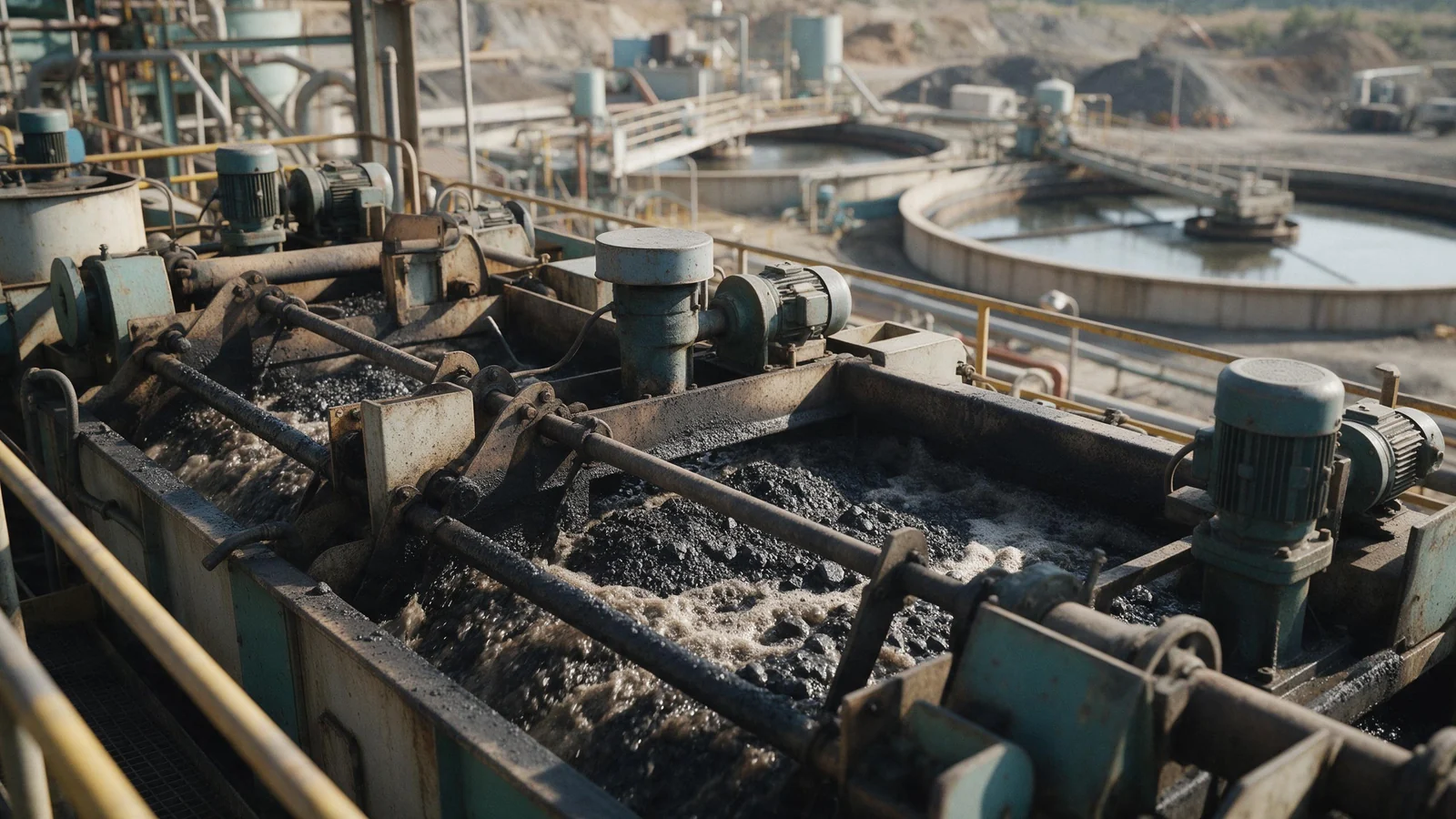
Header image: illustrative, not a photograph of a specific project.
Say a mine owner asks why two nickel processing routes look nothing alike before a flowsheet is even drawn. The honest answer starts with geology. Sulphide deposits form from magmatic processes and are generally associated with iron and magnesium rich rocks, as the USGS nickel statistics page explains. Laterites form by weathering of ultramafic rocks. That one sentence is the whole fork in the road.
Sulphide ores are usually higher grade but less abundant. Laterite ores are the opposite: lower grade, but they make up a much larger share of known land based nickel. You'll see both described as nickel ore, yet they demand different unit operations. Xinhai reports 70+ ore types across its published figures, and nickel sits in its energy transition minerals group alongside lithium, graphite, quartz and phosphate. The company lists nickel with flotation, magnetic separation and dense medium separation as a combined route, not as a single fixed recipe.
Sulphide Nickel Processing: Flotation Route
Most sulphide nickel plants mill the ore to liberate the nickel sulphide minerals, typically pentlandite or violarite, then float a bulk copper-nickel concentrate or separate copper and nickel concentrates. The choice depends on copper grade. A high copper content favours selective flotation. A low copper content often pushes you toward a bulk concentrate. It's a metallurgical call, not a marketing one.
Crushing and grinding come first. You need enough liberation for the flotation circuit to reject pyrrhotite and other iron sulphides. Overgrinding creates slimes that hurt selectivity and raise reagent consumption. Pyrrhotite rejection is a classic problem. You float pentlandite while depressing pyrrhotite, using lime, TETA, or other depressants. The reagent suite changes with mineralogy. That's why testwork programs spend hours on grind versus recovery curves. After flotation, the concentrate is thickened and filtered before shipment to a smelter or refinery. Some plants also produce a separate pyrrhotite concentrate for tailings disposal or sulphur recovery.
If you ask an EPC contractor to design one of these plants, ask whether the design office holds a metallurgical design qualification and which reporting standards it works to. Xinhai's mine design institute holds a Class B metallurgical industry design qualification and designs to JORC, NI 43-101, VALMIN, GB, Eurocodes, US, and Australian standards. That's a real set of standards, not a marketing badge.
Laterite Nickel Processing: Hydrometallurgy and Smelting
Laterite processing splits again. Limonite ores suit high pressure acid leaching, better known as HPAL. Saprolite ores suit rotary kiln electric furnace smelting, often called RKEF. HPAL dissolves nickel and cobalt into solution, then precipitates a mixed hydroxide product, MHP, or a mixed sulphide. RKEF makes a crude ferro-nickel product called nickel pig iron, NPI. The two routes share almost no equipment.
HPAL is autoclave chemistry. It handles acid, high temperature, and corrosive slurries. It also produces a lot of residue. RKEF is pyrometallurgy. It handles drying, calcining, and electric smelting to separate slag from metal. Neither is forgiving. A laterite flowsheet that looks cheap in a study can become expensive in operation if the ore body isn't properly characterised.
Laterite testwork isn't a quick bottle roll. You need variability sampling across the deposit, acid consumption tests, rheology work for HPAL slurries, and slag chemistry work for RKEF. This is where a mineral processing test programme earns its keep.
Nickel Processing Flow Sheet and Key Equipment
Start from ore receiving. A sulphide plant typically has a primary crusher, a grinding mill, flotation cells, concentrate thickeners, and pressure filters. A laterite HPAL plant adds an acid plant, autoclaves, counter current decantation, and precipitation circuits. A laterite RKEF plant adds a dryer, a rotary kiln, and an electric furnace. The common unit operations are crushing, grinding, dewatering, and tailings disposal. The rest diverges.
You'll still find flotation cells and grinding mills in both families, but only sulphide plants make flotation the main separation step. Magnetic separation appears as auxiliary equipment in some copper nickel sulphide circuits, but it's rarely the primary recovery route. Xinhai's equipment range includes flotation machines, magnetic separators, thickeners, and dewatering equipment. But a contractor's catalogue won't fix a bad flowsheet. The process must come first. For smaller or remote deposits, a modular processing approach can reduce site construction risk, though HPAL is difficult to modularise fully because of its pressure vessels and acid plant.
Choosing a Nickel Processing Route: A Buyer's Framework
Start with mineralogy and grade. Sulphide ore with a clean pentlandite response points to flotation. Laterite ore with a high limonite fraction points to HPAL. Laterite ore with a high saprolite fraction points to RKEF. If your deposit has both limonite and saprolite, you'll often need a split circuit or a phased approach. That's an expensive conversation to have after the plant is built.
| Decision factor | Sulphide route | Laterite route |
|---|---|---|
| Feed type | Magmatic sulphide ore, often higher nickel grade | Weathered laterite, limonite or saprolite, generally lower grade but broader |
| Workhorse process | Grinding and flotation to a concentrate | HPAL for limonite; RKEF smelting for saprolite |
| Market product | Nickel concentrate for smelting or refining | MHP, NPI, or matte depending on route |
| Capital pattern | Usually lower capital but smelter charges apply | High capital for HPAL; simpler but energy heavy for RKEF |
| Testwork focus | Grind size, reagent suite, concentrate grade | Acid consumption, slurry rheology, furnace slag chemistry |
Capital and operating cost trade offs matter, but you won't find a price per tonne here. Ask any supplier to model your specific ore. Feed scale also matters. A small high grade sulphide deposit might ship concentrate to a third party smelter. A large low grade laterite deposit may only work as an integrated HPAL operation with its own acid plant and power supply. Product specification closes the loop. In the United States, the leading uses for primary nickel were alloys and steels, electroplating, and other uses including catalysts and chemicals, according to the USGS Mineral Commodity Summaries 2026. A battery chemical buyer wants MHP or a refined nickel product, not NPI. A stainless steel mill can tolerate NPI. Decide who buys your product before you set the flowsheet.
Nickel Processing EPC and Testwork Scope
An EPC contractor shouldn't give you a flowsheet on the first call. The testwork sequence matters. Start with mineralogy and chemical assay. Then run bench scale flotation or leach tests. For laterite, pilot the HPAL or RKEF step before you commit capital. For sulphide, closed circuit flotation tests and locked cycle tests are the usual gate. You'll need a design basis that covers throughput, feed grade, product specification, reagent consumption, and tailings characterisation. That's where full scope testwork protects you from building the wrong plant.
After testwork, the EPC+M+O scope covers engineering, procurement, construction, mine construction management and mine operation management. Xinhai reports more than 600 mine EPC+M+O projects, according to the company's published figures. That's a capability statement, not a nickel specific portfolio. Xinhai has no published nickel project case study. For scale reference, Xinhai reports a 1.5 million t/a copper flotation project in Kazakhstan with a yield of 3.50%, Cu grade of 16.23%, and recovery of 66.23%, but that's a copper plant, not nickel. Ask every contractor the same question: show me a testwork report on my ore, not a previous project with a different mineralogy.
Regulatory scope varies by jurisdiction. A nickel plant may trigger environmental assessments, tailings management plans, and, for HPAL, acid plant permitting and pressure vessel codes. You'll need design work that complies with local codes and recognised reporting standards. For international financing, that often means JORC, NI 43-101, or VALMIN. Don't accept a design that can't show which standard it was built to. If you need to talk through a specific ore, contact a process engineer who can start with testwork, not a brochure.
Frequently asked questions
Why is nickel called the devil's metal?
The nickname comes from mining history, not metallurgy. Early German miners found a reddish ore that looked like copper but yielded no copper when smelted. They called it kupfernickel, meaning Old Nick's copper or devil's copper, after a mischievous spirit of folklore. The ore was actually a nickel arsenide. So the 'devil' label is a hangover from mistaken identity, not a statement about the metal's processing difficulty.
Are we running out of nickel?
No. Laterite resources are large and widespread, and recycling already supplies a major share of supply. USGS data show that in 2025 nickel recovered from scrap accounted for approximately 60% of apparent consumption in the United States. The real constraint isn't geological shortage. It's the capital and energy cost of turning low grade laterite into a product the market will pay for.
What country refines the most nickel?
It isn't a single fixed answer, and rankings shift. Indonesia has built a lot of laterite processing capacity in recent years, so it now tends to top production tables. China remains a major refiner of imported nickel. For a project owner, the practical point is that your route and location matter more than a headline country ranking. Ask a supplier for current capacity by route, not by flag.
What is the difference between sulphide and laterite nickel processing?
Sulphide processing is a physical separation route. You crush and grind magmatic sulphide ore, then float a nickel-bearing concentrate for shipment to a smelter. Laterite processing is usually chemical or thermal. Limonite laterite goes through high pressure acid leaching to make MHP or mixed sulphide. Saprolite laterite goes through rotary kiln electric furnace smelting to make nickel pig iron. The ore type decides the route, not the other way round.
Request a proposal for your ore
What to send for a useful reply
- Head assays and, if you have them, a phase or mineralogy report
- Target throughput in t/d and the product you want to sell
- Project stage: exploration, feasibility, financing or expansion
- Site basics: country, power, water and access
Not ready to share data yet? Read the EPC turnkey delivery page first.