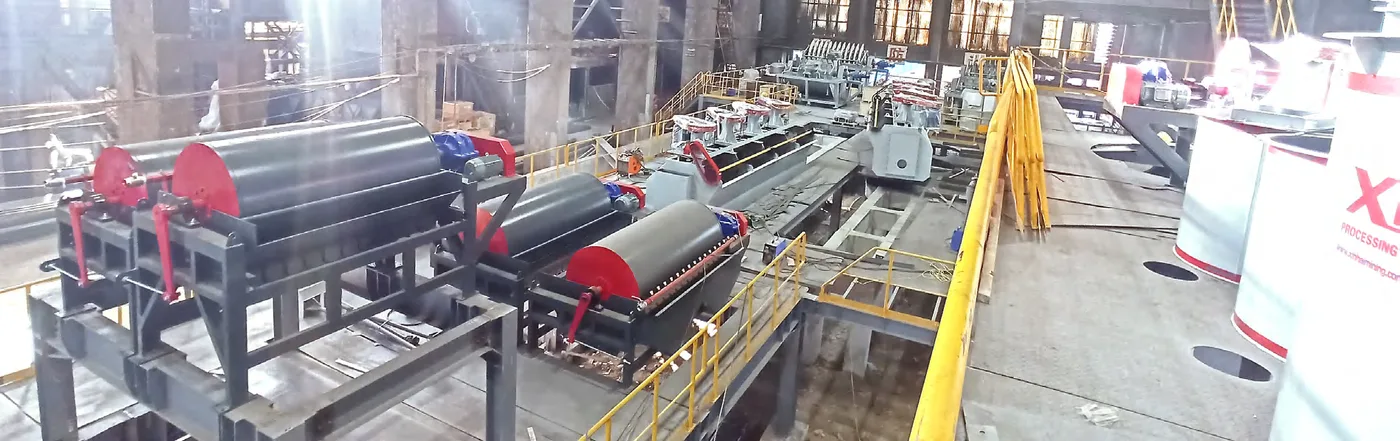
Phosphate: direct flotation, then reverse flotation to drop the carbonate
Phosphate rock is upgraded by direct flotation of the phosphate minerals, then reverse flotation after acid conditioning removes carbonate gangue.
Process route
The Pakistan programme is the reference: two rougher and two scavenger and two cleaner stages of direct flotation, acid conditioning, then three stages of reverse flotation.
Crushing and grinding
Crushing and grinding to liberate phosphate minerals from carbonate and silicate gangue.
Desliming
Removal of fines that consume reagent and depress selectivity.
Direct flotation
Two rougher, two scavenger and two cleaner stages recover the phosphate minerals.
Acid conditioning
The concentrate is conditioned with acid to prepare the surface for carbonate removal.
Reverse flotation
Three stages of reverse flotation remove carbonate, producing the final phosphate concentrate.
Equipment in this circuit
Manufactured at our own bases and matched to the circuit capacity, not bought package by package.
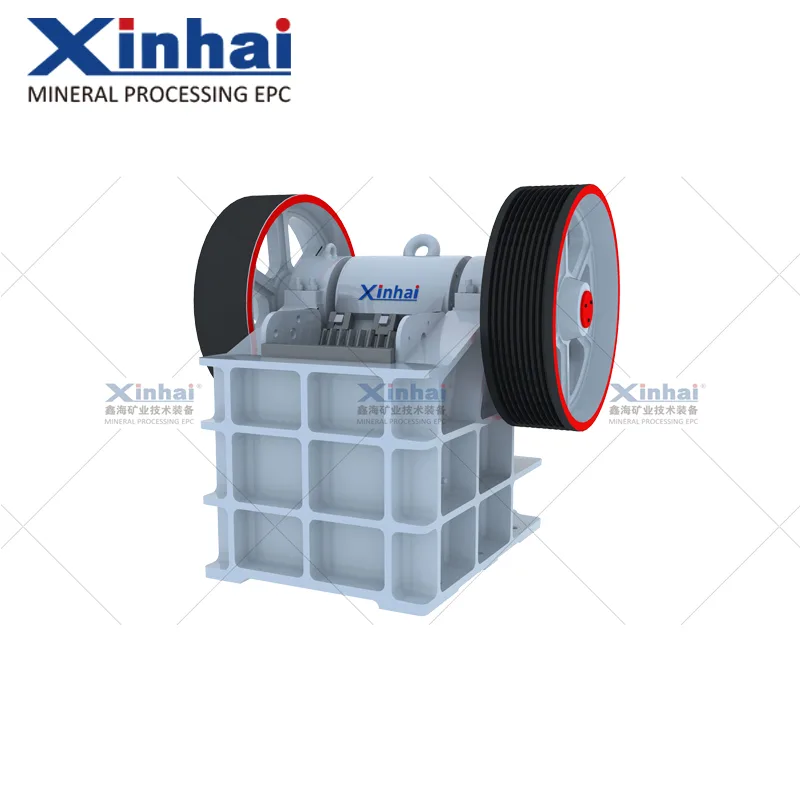
Jaw crusher
PE series for primary crushing and PEX series for secondary and fine crushing.
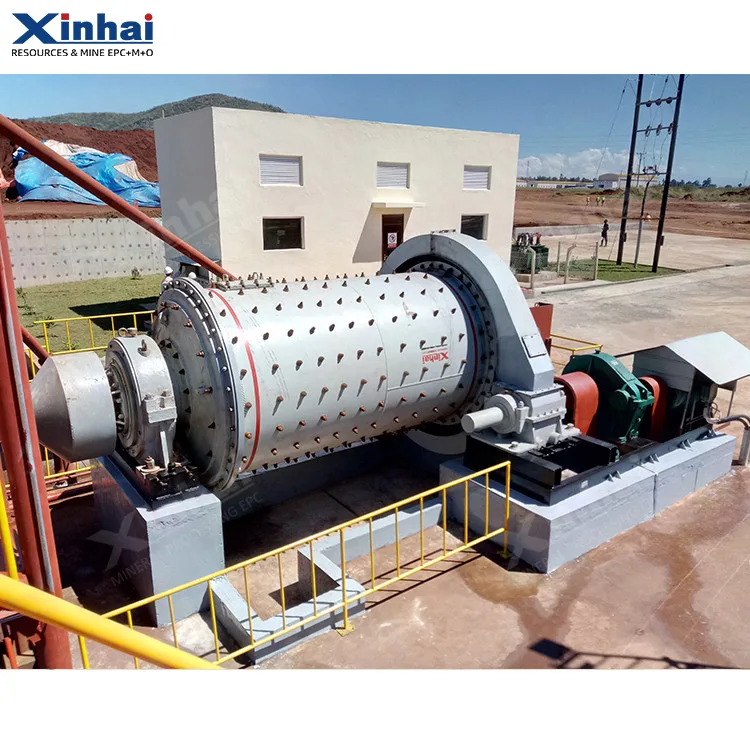
Ball mill
Wet grid mills for primary grinding and overflow mills for secondary grinding.
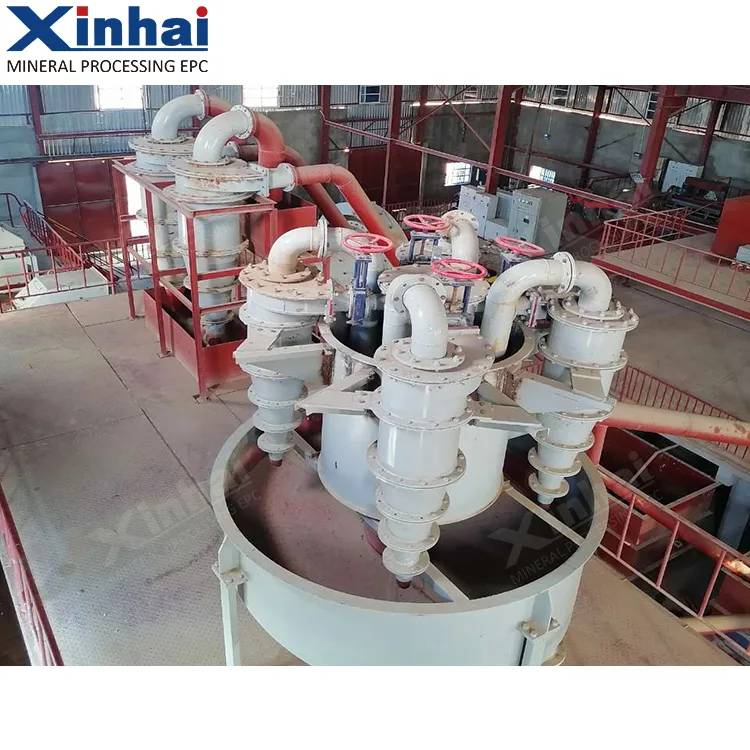
Hydrocyclone
XC, XHCV and XN series for classification, desliming and thickening duty.
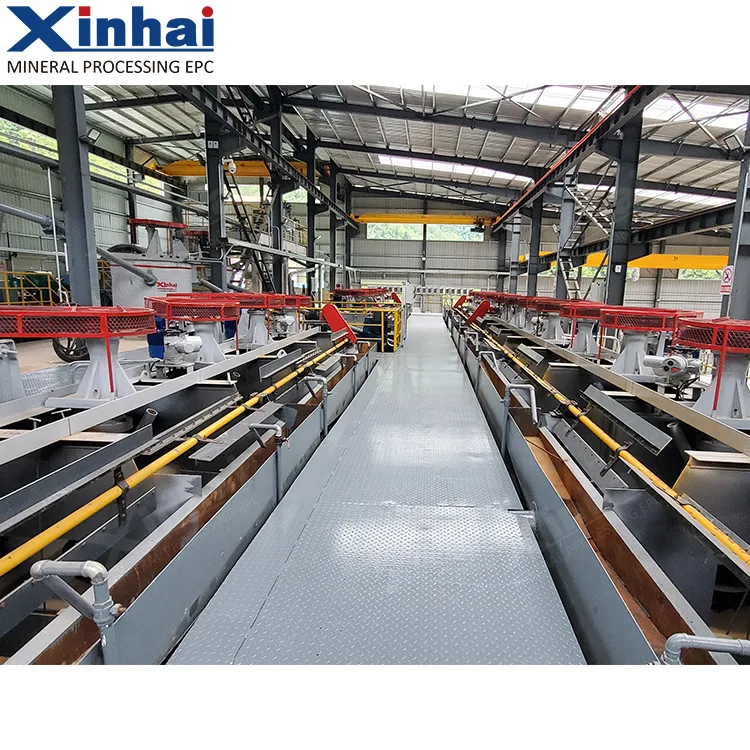
Flotation cells
SF, JJF, XCF, KYF and BF machines up to 320 m3, plus flotation columns.
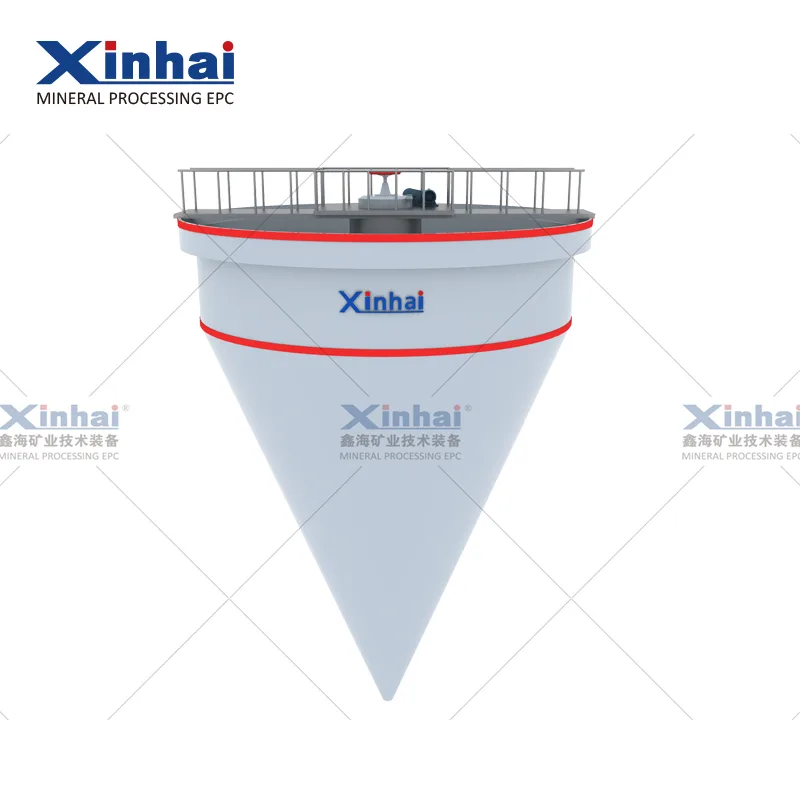
Thickener
Deep cone and high efficiency thickeners up to 100 m diameter.
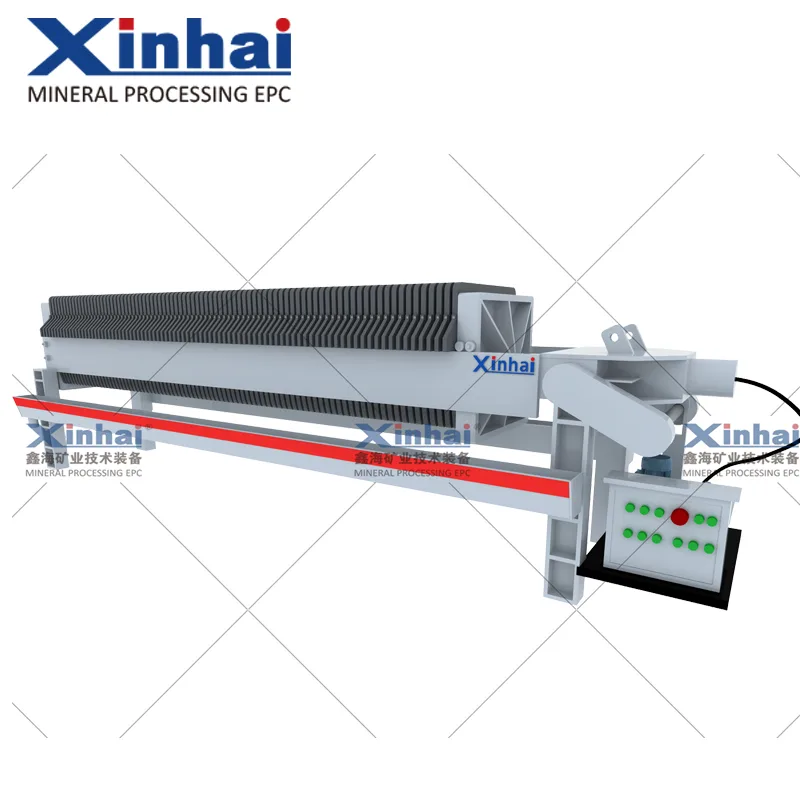
Filter press
Plate and frame and membrane presses for concentrate and tailings dewatering.
Reference projects
Figures are those reported for these projects in the Xinhai project and test brochures.
Phosphate extended continuous test, concentrate at 22.43% P2O5, 62.10% yield and 56.10% recovery
Test work720 t/d phosphate processing plant
Plant scopeCommon questions
What result did the Pakistan programme reach?
Why is reverse flotation needed?
Can this run as a semi-industrial trial before construction?
What is phosphate rock beneficiation?
What impurities decide whether direct flotation or reverse flotation is used?
What sample and assay package is needed before phosphate beneficiation testwork?
How does phosphate beneficiation affect phosphogypsum and radioactivity downstream?
What the acid plant actually buys: BPL, P2O5 and the CaO/P2O5 screen
Say a mine owner sends a drill core and asks whether the phosphate will feed an acid plant cleanly.
Say a mine owner sends you a drill core and asks whether the phosphate will feed an acid plant cleanly. That question, not the grade estimate, is where phosphate beneficiation actually starts. The acid plant doesn't buy phosphate rock. It buys a spec: P2O5 grade, a CaO/P2O5 ratio it can tolerate, and a magnesium oxide level that won't wreck its sulphuric acid budget. Get those wrong and you'll deliver a concentrate nobody wants. Even with the best flotation recovery in the world.
BPL, bone phosphate of lime, is old trade shorthand. A 75% BPL concentrate has roughly 34% P2O5. Modern contracts specify P2O5 directly. That's not snobbery. It's precision. The buyer cares about phosphate content, sure. But impurities matter more. USGS Mineral Commodity Summaries 2026 show domestic phosphate rock production has held near 20 million tons for the past several years as Florida reserves decline and grades slip. So impurity control is the real commercial filter. Not headline grade.
The CaO/P2O5 ratio is a quick screen. Apatite carries calcium, so a baseline ratio is normal. Anything above baseline hints at excess carbonate minerals. Carbonate reacts with acid before phosphate. It consumes sulphuric acid and releases CO2. That's wasted acid. And reactor foam. You can calculate the ratio from an assay in five minutes. It'll tell you whether to reach for reverse flotation or calcination.
Sedimentary versus igneous phosphate: two ores, two different problems
Rock genesis drives the beneficiation problem. More than head grade does. Sedimentary phosphate, usually francolite, is fine-grained. It's often full of clay that slimes heavily. And carbonate cement that buffers flotation. Igneous phosphate, typically fluorapatite, is coarser. But it brings silicates, iron and titanium oxides, carbonates and occasional sulphides. Same process? No. You'll make different decisions at every step.
| Characteristic | Sedimentary phosphate | Igneous phosphate | What it means for beneficiation |
|---|---|---|---|
| Dominant phosphate mineral | Francolite (carbonate-bearing apatite) | Fluorapatite | Carbonate substitution changes flotation behaviour. |
| Liberation pattern | Fine-grained, often requiring fine grinding | Coarser, sometimes recoverable at coarser grinds | Sedimentary ores may need more size reduction before separation. |
| Typical gangue | Clay, quartz, carbonate cement | Silicates, Fe/Ti oxides, carbonate, sulphides | Sedimentary circuits battle slimes; igneous circuits battle oxide minerals. |
| Flotation tendency | Often reverse flotation of carbonate after desliming | Often direct flotation of phosphate, with reverse steps for silicate or carbonate | Route must be set by testwork, not by rock name. |
The takeaway is simple. Don't let a drill core label decide the circuit. Let mineralogy decide. A sedimentary ore with low carbonate may run direct flotation well. An igneous ore with carbonate veins may need reverse flotation first.
The impurity that decides the flowsheet: MgO and carbonate limits
Magnesium oxide ends more phosphate projects than any other impurity. In a wet-process acid plant, magnesium consumes sulphuric acid. It forms viscous magnesium phosphate and sulphate species. Those species slow filtration. They scale heat exchangers. A concentrate with slightly lower P2O5 grade but low MgO can be worth more. That's compared to a higher-grade concentrate with too much magnesium. That's not a grade problem. It's an acid consumption problem.
Carbonates are worse in one way: they release CO2. The acid plant sees foam. Not orderly digestion. So if a phosphate ore carries high carbonate, direct flotation often isn't enough. You may need reverse flotation. Carbonate minerals are floated away. Phosphate stays in the tailings. That reversal feels unnatural. But it's the cleanest way to cut carbonate load.
Calcination is the high-energy card. Heat the rock, decompose carbonates, drive off CO2. The remaining lime often reacts with silica. It upgrades phosphate without flotation. But it costs a lot of energy and makes a CO2 stream. You don't choose calcination because it's elegant. You choose it because the ore is too carbonate-rich for flotation.
The MgO line is the invisible threshold. It's what a buyer uses to separate acceptable and unacceptable feed. It varies by acid plant, by rock blend, by sulphuric acid price. No universal number exists. That's why the assay comes first. Not the flowsheet.
Why slimes and water consumption quietly kill a phosphate project
Fine clay slimes are a quiet project killer. They coat phosphate surfaces. They consume reagent. They stabilise froth you don't want. When sedimentary phosphate ore starts producing slimes, flotation selectivity falls apart. You can't blame the collector. Desliming before flotation isn't an afterthought. It's a prerequisite.
Then there's water. Phosphate beneficiation uses a lot of it. Slimes hold water like a sponge. Tailings thicken slowly. Recycled water carries residual reagents and fine solids back into the circuit. Ignore water balance during flowsheet design and the plant will surprise you later. A water bill. A tailings problem. Testwork should quantify slime generation early. Not at the end. The metallurgical testwork service exists to find these problems before construction, not during it. For a broader look at how testwork fits into project development, see our insights.
What the rock carries downstream: phosphogypsum and radioactivity
Phosphate rock isn't radioactive in a headline sense. But it contains trace uranium and thorium series radionuclides. When rock meets acid, those radionuclides partition. Some go to phosphogypsum. Some stay in process water. The U.S. EPA's TENORM pages describe this pathway in detail.
Beneficiation can't make radioactivity disappear. It can change where it ends up. A higher-grade, lower-impurity phosphate concentrate means less phosphogypsum per tonne of P2O5. That's in the acid plant. That's not a magic fix, but it changes the byproduct burden. Flotation rejects some radionuclides with tailings. The acid plant still sees the rest.
What to test first: the assay and sample package a buyer must supply
Before any phosphate beneficiation flowsheet decision, you need a full chemical assay. Not just P2O5. You need MgO, CaO, SiO2, Fe2O3, Al2O3, loss on ignition, and trace elements. That's the minimum set. It lets you calculate the CaO/P2O5 ratio, estimate carbonate load, and judge if direct flotation will work.
You also need two sample splits. The washability sample shows how much slime the ore will make. And how much fine phosphate you'll lose if you deslime. The flotation sample is separate. It's for bench-scale carbonate and apatite separation. Don't send one bag of drill core and expect both answers. Send enough mass for each test. Under the JORC Code 2012, industrial minerals like phosphate are specification-defined; the resource must be reported in terms of the mineral and specification the project will supply.
Only after these tests will a flowsheet conversation mean anything. A laboratory accredited to ISO/IEC 17025, such as the CNAS-accredited laboratory at Yantai Xinhai Mining Research & Design Co., Ltd., can perform the testwork needed to sign off a phosphate flowsheet. Start with the testwork service before you touch a flowsheet, and explore our solutions for phosphate processing.
Sources
External references for the industry context on this page. Project figures come from our own project brochures.
U.S. Geological SurveyDomestic phosphate rock production has been about 20 million tons over recent years as Florida reserves decline.
U.S. Environmental Protection AgencyPhosphate rock carries trace radionuclides that partition into phosphogypsum and process water during acidulation.
JORC Code 2012Industrial minerals like phosphate are specification-defined, and resources must be reported in terms of the mineral and specification the project will supply.
Send the assay and the tonnage target for your Phosphate project.