Tungsten Ore Processing: Wolframite and Scheelite
Tungsten processing splits on one question: wolframite or scheelite.
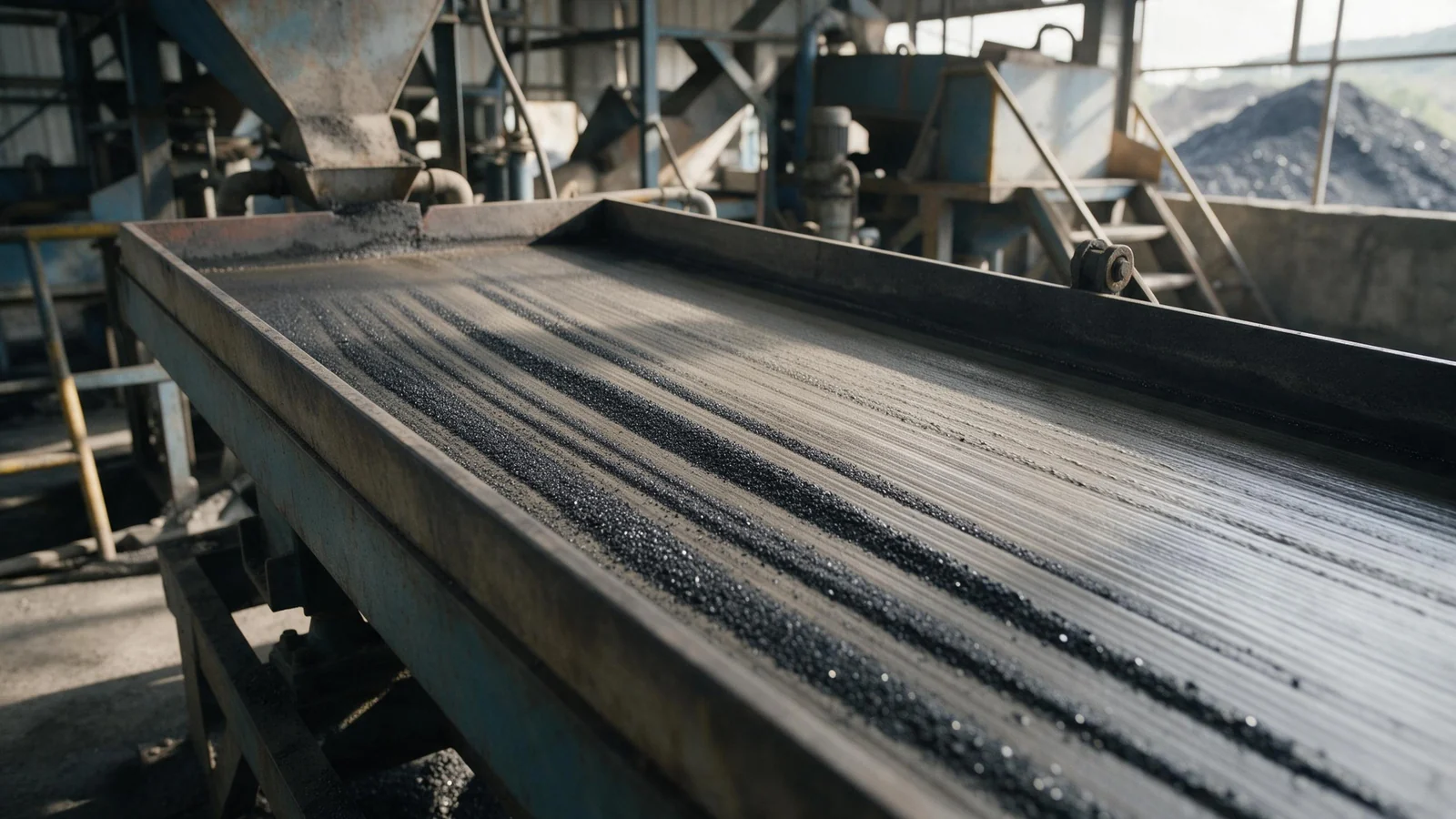
Header image: illustrative, not a photograph of a specific project.
Say a mine owner asks how to choose a tungsten ore processing route. You start with the mineral. Wolframite and scheelite behave differently in a plant, so the flowsheet splits before any equipment is ordered. That split drives everything downstream: grinding, separation, reagent demand, even the tailings circuit. Misread the mineralogy and you'll chase the flowsheet for months. It's that simple.
Wolframite is a tungstate of iron and manganese. Scheelite is calcium tungstate. They contain the same metal but they don't respond to the same machines. One is dense and weakly magnetic. The other is naturally floatable. That's why a single tungsten processing plant can't treat both ores identically without sacrificing recovery. You'd be surprised how often people try.
Wolframite vs scheelite: two ore types, two process routes
Wolframite's high density makes it a natural candidate for gravity concentration. Its weak magnetic response then allows a second upgrading stage. Scheelite, by contrast, carries a fine grain size in many deposits and responds well to flotation with fatty acid collectors. The table below sets out the operating split. Don't treat it as gospel though.
| Parameter | Wolframite | Scheelite |
|---|---|---|
| Mineral type | Tungstate of iron and manganese | Calcium tungstate |
| Key physical property | High density, weakly magnetic | High density, usually non-magnetic, naturally floatable |
| Typical route | Gravity concentration, then magnetic upgrading | Flotation with fatty acid collectors |
| Liberation behaviour | Brittle, avoid over-crushing | Fine-grained, needs fine grinding |
| Reagent demand | Little to none for gravity and magnetic stages | Fatty acid collectors, depressants, often heated cleaning |
That table is a planning tool, not a final design. Actual route selection still depends on liberation size, grade, and the penalty elements in the concentrate. No two orebodies read the same.
Wolframite processing: gravity concentration and magnetic upgrading
You'll often see jigs and shaking tables on a wolframite circuit. They recover the coarse, liberated particles early. Rod milling is preferred over ball milling at the start because it reduces over-crushing. Wolframite is brittle. Break it too fine and you'll send tungsten to the tailings as slimes. That's money down the drain.
After gravity concentration, the rougher concentrate usually contains weakly magnetic gangue minerals. A magnetic separation stage removes them. The cleaner concentrate can then go to a downstream chemical process or to a gravity finishing circuit. The exact equipment sequence isn't fixed; it follows the size-by-size assay work. Gravity concentration and magnetic separation are the beneficiation techniques most commonly applied to wolframite ore, with flotation applied to scheelite ores (ScienceDirect review). Sounds straightforward. The devil's in the grind.
Scheelite processing: flotation and reagent control
Scheelite often demands fine grinding to liberate the tungsten mineral from calcareous gangue. Flotation is the main route, and reagent control matters more than the machine itself. Fatty acid collectors are common. Lime is used to depress gangue minerals, though the exact reagent suite depends on the ore. Get the pH wrong and you'll watch recovery slip away.
One step that catches newcomers is heated cleaning. In scheelite flotation, the rougher concentrate is often cleaned at elevated temperature. The heat improves selectivity against calcite and fluorite. Without it, you can produce a concentrate that's too low grade for the smelter contract. Ever seen a shipment rejected at the gate? It's not pretty.
Why testwork decides the flowsheet
You can't pick gravity versus flotation from a hand specimen. You need mineralogy, liberation size, and a locked-cycle test. The testwork answers three questions: what is the tungsten mineral, how fine must you grind, and what penalty elements travel with the concentrate. Skip this step and you're guessing.
Xinhai reports its mining research institute operates a CNAS-accredited laboratory covering 70+ ore types and performing about 5,000 element analyses per month, including Bond work index testing. That kind of data feeds directly into process design and equipment selection. If you're commissioning a tungsten project, the lab results should arrive before the flowsheet drawing. See the mineral processing test service for what a sample programme looks like. It's cheap insurance compared to a failed plant.
From testwork to a tungsten processing plant
Once the testwork defines the route, the plant itself is an engineering and procurement exercise. A single contractor can carry the job from detailed design through construction and into operation. That's the EPC+M+O model: Engineering, Procurement, Construction, Mine Construction Management, and Mine Operation Management. The plant can be conventional stick-built or a modular mineral processing plant.
Xinhai reports its mine design institute has a Class B metallurgical industry design qualification and designs to JORC, NI 43-101, VALMIN, GB, Eurocodes, US, and Australian standards. Xinhai lists tungsten among its 70+ ore types, but no specific tungsten project case study is published in the approved facts. That's a useful distinction to keep in mind: capability claims are not the same as a named, published flowsheet for your ore. See EPC+M+O services for how the full scope is delivered. Ask for the drawing, not the brochure.
Tungsten concentrate quality and downstream requirements
Tungsten concentrate is commonly sold on its WO3 grade, but the acceptable number varies by ore type and by smelter contract. Some buyers want a gravity concentrate with minimal penalty elements. Others accept a flotation concentrate that carries more calcium because their downstream process can handle it. You need to define the saleable specification before final plant design. The USGS notes that scheelite and wolframite are the principal minerals currently mined for tungsten (USGS MCS 2026).
Ask any supplier: what WO3 grade have you actually produced from this ore type, and what penalty limits did the buyer accept? The answer tells you more than a brochure. Sometimes a lot more.
What is tungsten ore processing?
Tungsten ore processing is the sequence of physical and chemical steps that separates tungsten minerals from waste rock and upgrades them into a saleable concentrate. The two principal minerals mined for tungsten are wolframite, a tungstate of iron and manganese, and scheelite, a calcium tungstate. They contain the same metal but respond to different separation methods, so the first step is always mineral identification.
Wolframite is dense and weakly magnetic, which makes gravity concentration followed by magnetic separation the standard route. Scheelite is naturally floatable and often fine-grained, so flotation with fatty acid collectors is the usual choice. Liberation behaviour also differs: wolframite is brittle and should not be over-crushed, while scheelite commonly requires fine grinding to separate it from calcareous gangue.
After the primary separation, the rougher concentrate is upgraded. Wolframite concentrate is cleaned with magnetic separation to remove weakly magnetic gangue. Scheelite concentrate is often cleaned at elevated temperature to improve selectivity against calcite and fluorite. The final product is sold on its WO3 grade, but acceptable levels vary by ore type and smelter contract, so the saleable specification must be defined before plant design.
Testwork answers the key questions before design: what is the tungsten mineral, how fine must you grind, and what penalty elements travel with the concentrate. Xinhai reports its mining research institute operates a CNAS-accredited laboratory covering 70+ ore types and performing about 5,000 element analyses per month, including Bond work index testing.
How tungsten ore is processed: a step-by-step overview
Processing tungsten ore follows a sequence that starts with mineral identification and ends with a saleable concentrate. The steps below are drawn from the industry reference and the approved facts on this site.
- Identify the tungsten mineral. Wolframite and scheelite require different routes. Wolframite is dense and weakly magnetic; scheelite is naturally floatable. Mineralogy determines the flowsheet.
- Liberate the mineral. Wolframite is brittle, so rod milling is preferred to avoid over-crushing. Scheelite often needs fine grinding to separate it from calcareous gangue.
- Apply the primary separation method. For wolframite, use gravity concentration with jigs and shaking tables. For scheelite, use flotation with fatty acid collectors.
- Upgrade the rougher concentrate. Wolframite concentrate is cleaned with magnetic separation to remove weakly magnetic gangue. Scheelite concentrate is often cleaned at elevated temperature to improve selectivity against calcite and fluorite.
- Define the saleable specification. Tungsten concentrate is sold on WO3 grade, but acceptable levels vary by ore type and smelter contract. Penalty elements must be controlled.
Testwork answers the key questions before design: what is the tungsten mineral, how fine must you grind, and what penalty elements travel with the concentrate. Xinhai reports its mining research institute operates a CNAS-accredited laboratory covering 70+ ore types and performing about 5,000 element analyses per month, including Bond work index testing.
Frequently asked questions
How is tungsten extracted from wolframite ore?
Wolframite ore is typically processed by gravity concentration followed by magnetic separation. The high density of wolframite lets jigs and shaking tables recover coarse liberated particles, while weak magnetic properties allow a second upgrading stage. After beneficiation, chemical extraction such as alkali leaching is widely used to dissolve tungsten from the concentrate (MDPI leaching review).
Where is tungsten found?
Tungsten is found mainly in the minerals scheelite and wolframite. Both occur in hard-rock deposits, and wolframite is also recovered from placer deposits. The USGS provides statistics on the worldwide supply of, demand for, and flow of tungsten (USGS Tungsten Statistics).
What is tungsten used for?
An estimated 60% of the tungsten consumed in the United States is used in cemented carbide parts for cutting and wear-resistant applications, according to the USGS Mineral Commodity Summaries 2026 (USGS MCS 2026). The metal's hardness and high melting point also make it valuable in steels, alloys, and electrical contacts.
Why doesn't the US mine tungsten?
Tungsten has not been mined commercially in the United States since 2015, according to the USGS. The country relies on imports and recycling to meet demand. Economic factors, ore grades, and the availability of overseas supply all influence the decision not to operate domestic tungsten mines.
Request a proposal for your ore
What to send for a useful reply
- Head assays and, if you have them, a phase or mineralogy report
- Target throughput in t/d and the product you want to sell
- Project stage: exploration, feasibility, financing or expansion
- Site basics: country, power, water and access
Not ready to share data yet? Read the EPC turnkey delivery page first.