Zircon and titanium: four separation principles in one plant
Heavy mineral sands need gravity, magnetic and electrostatic separation in series, because the valuable minerals differ in density, magnetic susceptibility and conductivity.
Process route
The order matters. Roughing by gravity concentrates the heavy fraction, then magnetic and electrostatic stages split it into individual mineral products.
Washing and screening
Removal of slimes and oversize from the sand feed.
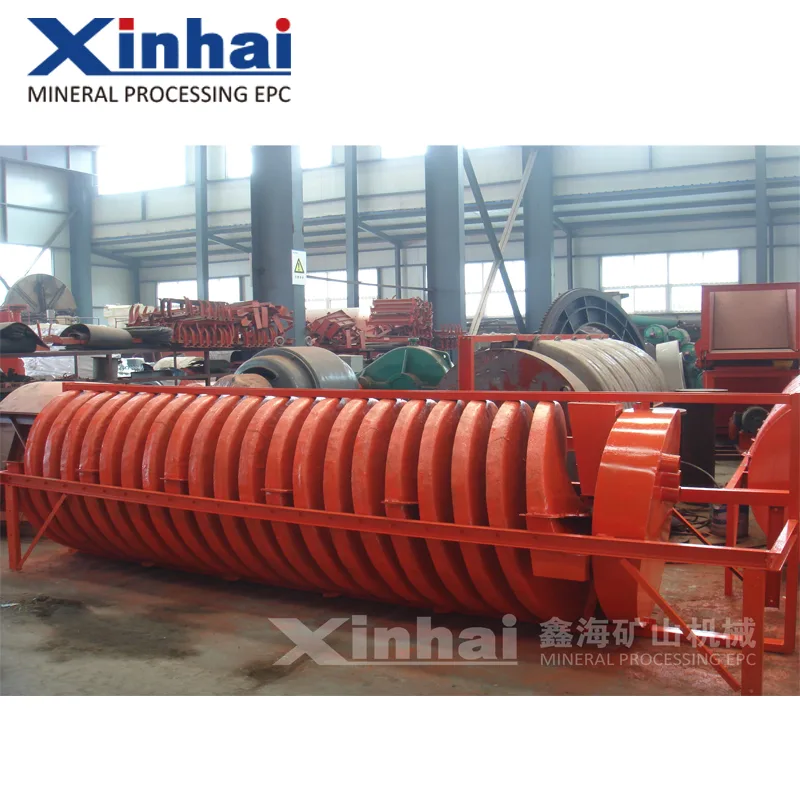
Spiral roughing
Spiral chutes concentrate the heavy mineral fraction and reject the bulk of the quartz.
Magnetic separation
Ilmenite and other magnetic titanium minerals are recovered magnetically.
Gravity and electrostatic separation
Zircon is recovered by combined gravity and electrostatic separation, which also splits conductive from non-conductive minerals.
Product finishing
Individual concentrates of ilmenite, zircon, rutile and monazite are dewatered and dried.
Equipment in this circuit
Manufactured at our own bases and matched to the circuit capacity, not bought package by package.
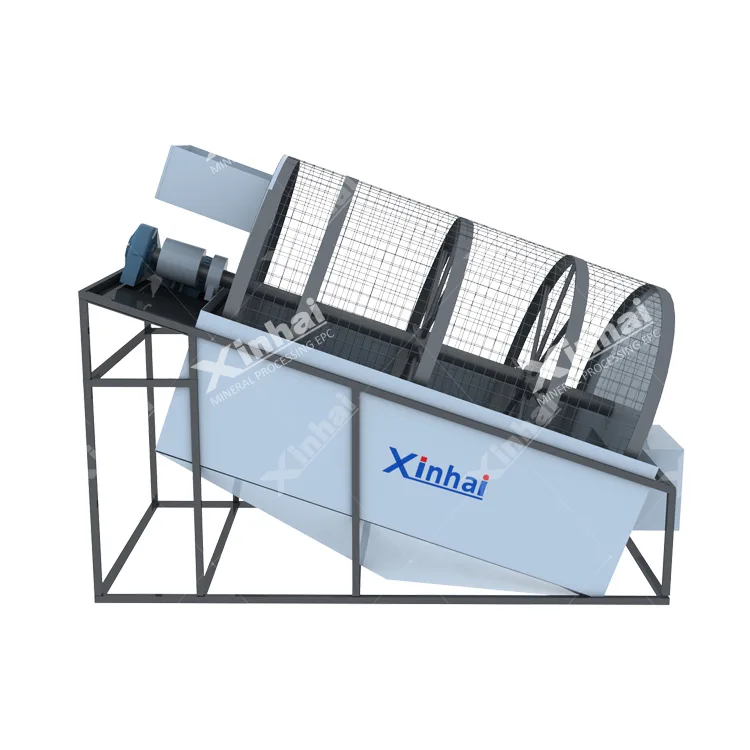
Trommel screen
Washing and scrubbing of clay bearing and alluvial feed.
Spiral chute
Roughing duty on heavy mineral sands and alluvial deposits.
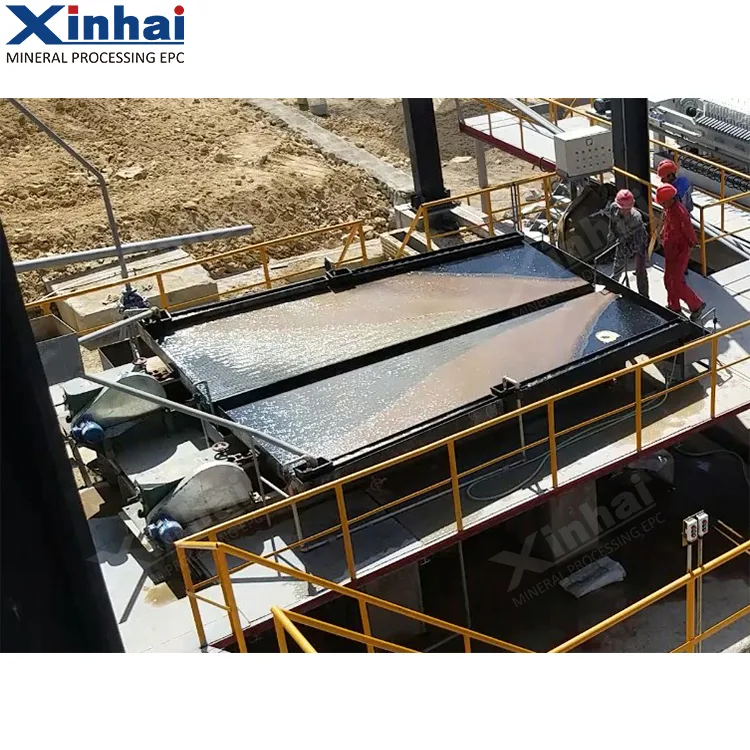
Shaking table
Fine gravity separation for gold, tungsten, tin and heavy mineral sands.
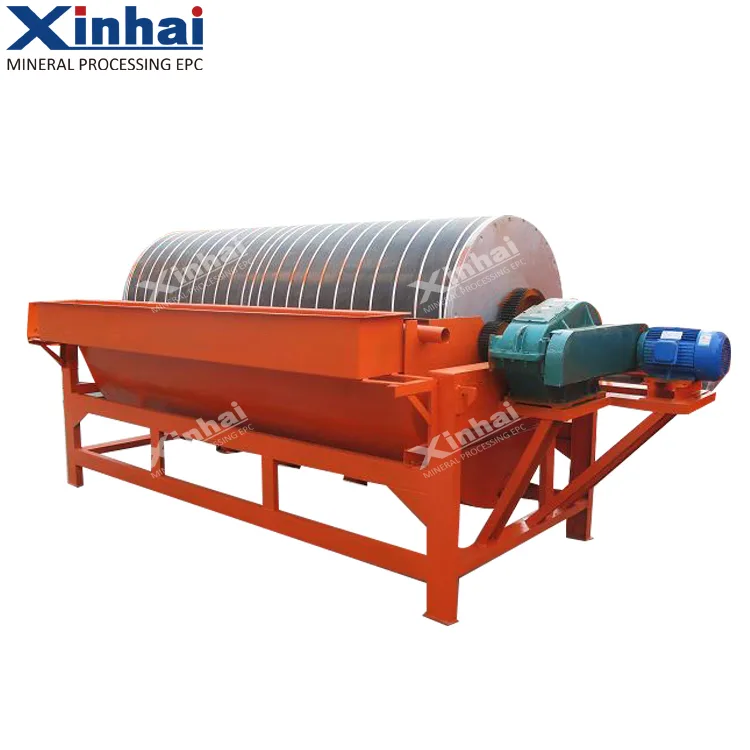
Magnetic separator
Wet and dry drum, high intensity and high gradient separators.
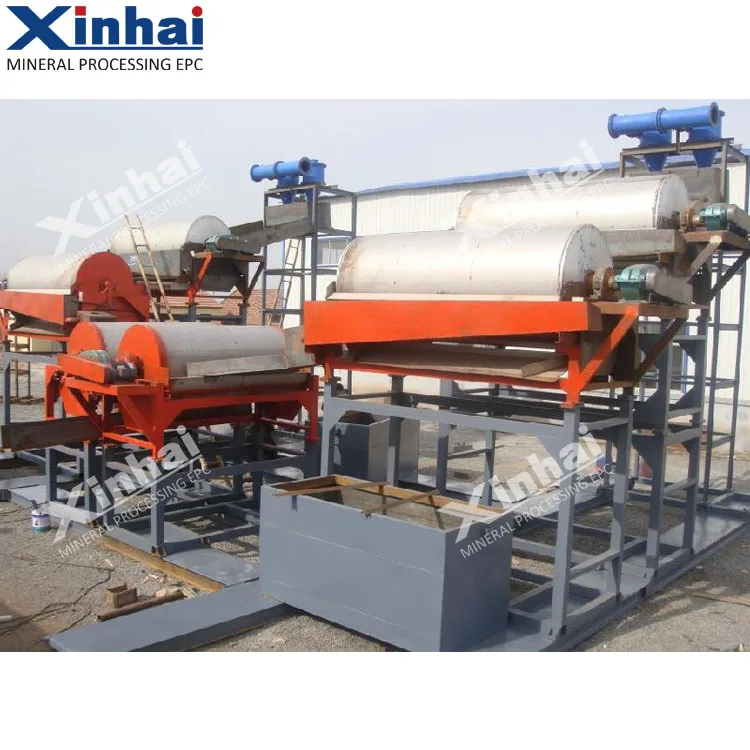
Dry magnetic separator
Dry drum separation for pre-concentration and iron removal.
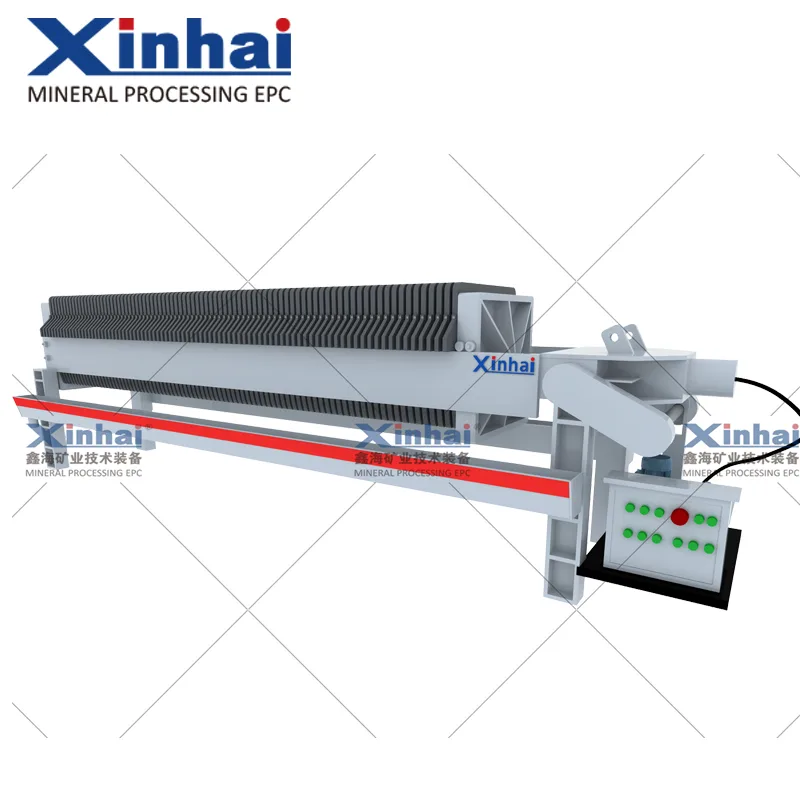
Filter press
Plate and frame and membrane presses for concentrate and tailings dewatering.
Reference projects
Figures are those reported for these projects in the Xinhai project and test brochures.
Zircon and titanium sand separation test programme
Test work2,000 t/d zircon and titanium plant recovering ilmenite, zircon, rutile and monazite
Plant scope1 Mt/a zircon and titanium project
Plant scopeCommon questions
Magnetic first or gravity first?
Which products can be recovered?
Is electrostatic separation always required?
Which heavy minerals are separated by magnetic susceptibility and conductivity rather than density alone?
What sample size and size-fraction mineralogy does a dry separation plant testwork programme require?
How does zircon's naturally occurring radioactivity affect monazite handling and transport?
Why do slimes and clay reduce spiral recovery in a wet concentrator?
Why the wet concentrator and the dry plant are two different jobs
The wet concentrator and the dry separation plant fail in different ways, and the sample you send to the laboratory decides which failure you get.
Say a mine owner asks where zircon and titanium separation starts to go wrong, and I'll point at the sample. Not the flowsheet, not the equipment. The sample.
Most heavy mineral sands plants are really two plants bolted together. The wet concentrator uses gravity to upgrade a run of mine feed into a heavy mineral concentrate. The dry plant then separates that concentrate into ilmenite, rutile, zircon and, where present, monazite. You can't optimise them as one box. Failure modes differ.
A wet concentrator fails through slimes, clay, water chemistry and spiral recovery loss. A dry plant fails through moisture, surface charge, screen blinding, dust and radioactivity. That distinction matters. When a spiral circuit loses recovery, the cause is almost never the same as when an electrostatic separator misplaces zircon into a rutile product. You'll chase your tail if you treat them as one troubleshooting problem.
The wet plant must do one thing before anything else: reject quartz, clay and light gangue while keeping every heavy mineral particle. The dry plant must do the opposite job, splitting a heavy mineral concentrate into saleable products with tight impurity control. Different physics, different instruments, different sample requirements. Lock the wet plant before dry testwork begins. If the wet plant hasn't produced a clean, dry, tightly sized heavy mineral concentrate, the dry plant cannot be tested meaningfully.
Reading the mineralogy: ilmenite, leucoxene, rutile, zircon and monazite
You separate these minerals by density, then by magnetism, then by conductivity. Density alone is not enough. Ilmenite is strongly magnetic, leucoxene only weakly magnetic, rutile is non-magnetic, zircon is non-magnetic, and monazite is paramagnetic but its magnetic response varies with thorium content. In order of decreasing magnetic susceptibility, a typical dry plant feed might run: ilmenite, leucoxene, garnet, monazite, and then the non-magnetic pair rutile and zircon. Conductivity separates rutile from zircon because rutile conducts electricity and zircon does not. Rutile is a conductor, ilmenite and leucoxene are weakly conductive or non-conductive depending on alteration, and zircon and monazite are non-conductors. Rutile and zircon are close in density, far too close for a gravity table to split them cleanly.
Altered ilmenite and leucoxene blur the magnetic cut points. A grain of ilmenite that has lost iron to weathering becomes less magnetic and can report to the leucoxene product or even the non-magnetic fraction. That's why a single magnetic susceptibility number from a random grain means little. You need the distribution by size fraction, not an average for the whole sample.
Monazite must be tracked from the very first assay because it concentrates naturally occurring radioactivity. You cannot leave it as an afterthought in a table of minor minerals. It changes handling, storage and transport classification long before the dry plant starts.
What the chloride and sulphate pigment routes demand of your titanium product
Titanium pigment plants use either the chloride route or the sulphate route. They do not buy the same feedstock. The chloride route wants a high TiO2 feedstock, usually a slag or synthetic rutile, with very low iron, and even tighter limits on elements that upset the chlorination reactor. The sulphate route can accept lower TiO2 feed, ilmenite for example, but it cares about iron and calcium because those affect acid consumption and waste handling.
Here is the comparison a buyer should keep on the desk.
| Requirement | Chloride route | Sulphate route |
|---|---|---|
| TiO2 in feed | Higher, typically upgraded before use | Lower, ilmenite can be direct feed |
| Iron tolerance | Tight | Wider but still cost-relevant |
| Calcium and magnesium | Must be low for reactor stability | Affect acid consumption and gypsum quality |
| Other impurities | Chromium, vanadium, niobium and manganese matter | Phosphorus, niobium and alumina matter |
The chloride route's impurity penalties are not linear. A small increase in calcium or magnesium can shorten reactor campaigns. The sulphate route's main cost is acid consumption, so iron and calcium directly affect the reagent bill. A single titanium concentrate rarely serves both routes well. You either blend and compromise, or you design the dry plant to make two titanium products. That's a commercial decision, not just a metallurgical one. The impurity that matters most is the one that takes a concentrate from saleable to penalty-laden. Don't wait for a batch rejection to learn which one that is.
Zircon's radioactivity and what it means for the monazite stream
Zircon and monazite both carry naturally occurring uranium and thorium. Monazite concentrates those elements more strongly, so any stream that upgrades monazite also upgrades radioactivity. The dry plant layout must plan for radioactive dust control from the first line on the drawing. That means sealed transfer points, filtered air handling, and segregated storage for the monazite product.
Once monazite is concentrated beyond a certain level, transport classification changes. A bulk container of heavy mineral concentrate may be treated differently from a drum of monazite-rich product. You need to know the activity per gramme, not just the percentage of monazite in the mass. Ask your radiation safety adviser for the transport classification thresholds before you commit to a monazite product. Zircon itself is the main source of zirconium and hafnium, which occur in it at a ratio of about 36 to 1 (USGS Mineral Commodity Summaries 2022). The leading end use for zircon was ceramics, with foundry sand, refractories and zirconium chemicals also significant (USGS Mineral Commodity Summaries 2026). That context matters, because the same concentrate that supplies a ceramic grade zircon can also produce a monazite by-product that needs careful handling.
Slimes and clay: the thing that kills spiral recovery
Slimes are the fine particles, usually below 45 micrometres, that coat heavy mineral grains and change how they behave in a spiral. A fine clay coating makes an ilmenite grain act lighter and follow the water flow rather than the spiral's concentrating groove. You lose heavy mineral to the tailings stream. It's not always about clay mineralogy. Total clay content, particle size distribution and slurry viscosity all matter.
Wet screening and attritioning are pre-conditions for a spiral circuit. Attrition scrubbing strips the clay from the grain surfaces, and wet screening removes the slimes before they enter the spirals. Desliming cyclones, attrition cells and high-frequency screens are common arrangements, but the exact sequence depends on the clay's response. When spiral recovery drops, test the slimes fraction first. Measure the clay content by weight, then look at which clay minerals are present. Often the fix is not a new spiral profile but better desliming ahead of the circuit.
What to test before you commit to a dry plant
Before you commit to a dry plant, get quantitative mineralogy by size fraction. This is the first deliverable. A bulk assay that says 3 per cent zircon tells you nothing useful. You need to know, for example, how much of the zircon is in the minus 150 plus 75 micrometre fraction, and how much rutile is in the same fraction. Electrostatic and magnetic separation only work well on narrow size fractions, so the testwork must be done on the actual fractions your dry plant will see. Quantitative mineralogy means QEMSCAN, MLA or equivalent automated mineralogy by size fraction. A petrographer's visual estimate is not enough.
Bulk sample size is not a fixed number. It depends on your top size, the number of testwork stages, and the variability of the deposit. The supplier should ask for the same mass that a pilot plant needs, not less. Think in terms of enough mass to run a full factorial of electrostatic and magnetic settings on at least three size fractions, with enough left for a pilot run. Ask any supplier for a mass balance by size and mineral, not a single grade. If they can't give you that, the testwork is not ready. Bench-scale electrostatic and magnetic tests on representative size fractions will tell you whether a dry separation sequence is feasible. After that, a pilot-scale run on a larger sample confirms the sequence before you spend capital. You'll find the testwork questions covered on the mineral processing testwork page, and the broader flowsheet logic under solutions. For more field notes like this, see insights.
That's the part the dry plant flowsheet doesn't show you. Lock the wet plant first, read the mineralogy by size fraction, and test the actual separation response before you cut steel.
Sources
External references for the industry context on this page. Project figures come from our own project brochures.
USGS Mineral Commodity Summaries 2022 - Zirconium and HafniumZirconium and hafnium ratio of about 36 to 1 in zircon
USGS Mineral Commodity Summaries 2026 - Zirconium and HafniumLeading end use for zircon was ceramics, with foundry sand, refractories and zirconium chemicals also significant
Send the assay and the tonnage target for your Zircon and titanium project.